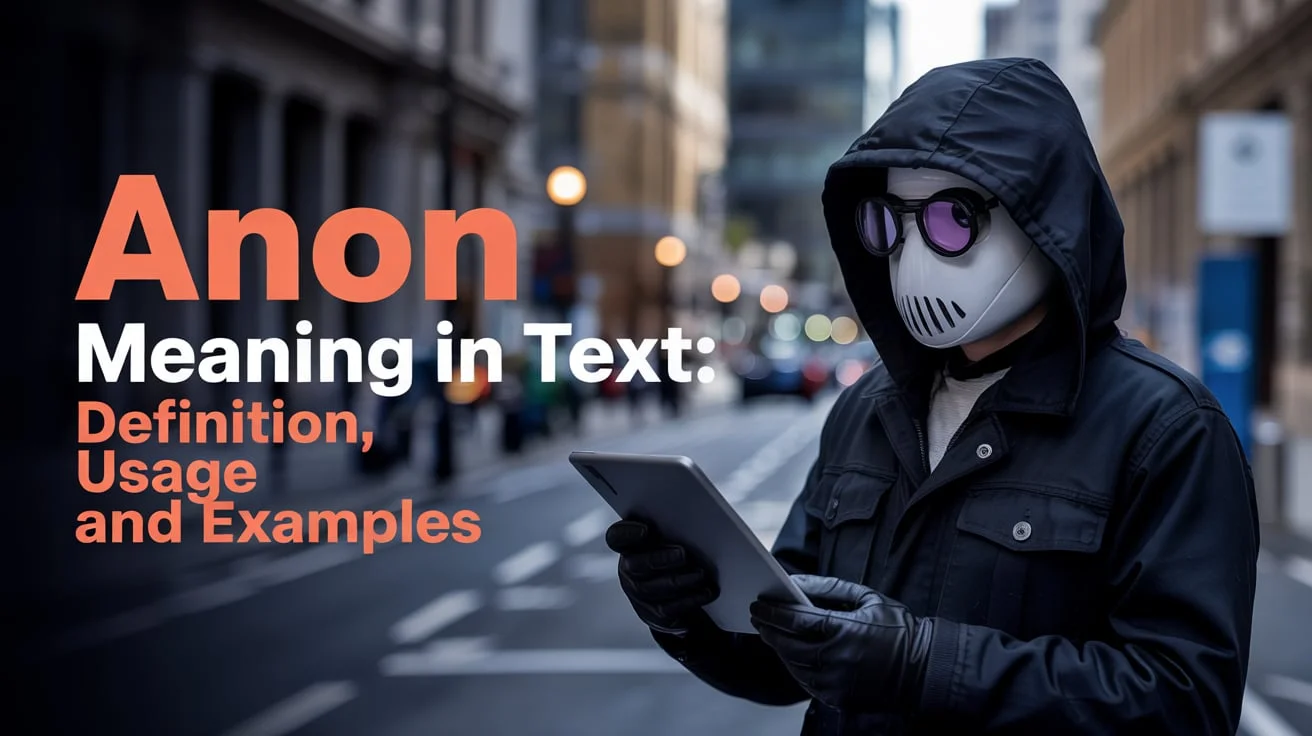
The word “anon” shows up everywhere online. You’ll spot it in comment sections, anonymous confessions, feedback forms, and private messages. Sometimes it feels harmless. Other times, it feels vague or even suspicious. That confusion is exactly why people keep searching for the anon meaning in text.
So let’s clear it up properly.
This guide explains what “anon” really means, where it comes from, how people actually use it today, and when you should replace it with something clearer. No filler. No recycled definitions. Just practical explanations, real examples, and better alternatives you can actually use.
What Does “Anon” Mean in Text?
In text, “anon” means anonymous.
That’s it.
When someone uses “anon,” they’re saying:
- Their identity is hidden
- Their name is intentionally withheld
- They don’t want personal identification attached to the message
It doesn’t mean fake.
It doesn’t mean shady.
It doesn’t automatically suggest bad intent.
It simply means the speaker chooses privacy.
You’ll rarely see “anon” used as part of a sentence. Instead, it works as a label or identifier.
Example:
Anon: I think this policy discourages honest feedback.
Here, “anon” sets context. It doesn’t change the message itself.
The Origin and Evolution of “Anon”
“Anon” didn’t start on the internet. It’s much older.
Where the Word Comes From
The term traces back to the Greek word anōnymos, meaning “without a name.” It moved through Latin and French before English adopted it as anonymous.
Writers shortened “anonymous” to “anon” long before social media existed. You’ll find it in:
- Academic texts
- Political pamphlets
- Early published essays
Back then, anonymity protected writers from retaliation. Today, it protects users from online backlash.
Different era. Same purpose.
How “Anon” Became Popular Online
Digital communication favors speed. Long words slow things down.
“Anon” stuck because it’s:
- Short
- Easy to recognize
- Neutral in tone
Forums and message boards normalized it. Social platforms kept it alive.
How “Anon” Is Used in Texting and Online Communication
You won’t usually hear someone say “anon” out loud. It lives almost entirely in text-based spaces.
Common Situations Where “Anon” Appears
“Anon” is used when:
- Someone shares a sensitive opinion
- Identity isn’t relevant
- A platform allows anonymous posting
- Privacy encourages honesty
It’s practical. Not emotional.
Real Examples of “Anon” in Text
Here’s how it appears naturally:
Anon: Management ignores employee burnout.
Question from anon: How do you deal with anxiety at work?
Posted by anon to protect privacy.
In each case, “anon” frames the message without adding meaning to the content itself.
“Anon” vs “Anonymous”: What’s the Difference?
They mean the same thing. The difference is tone and formality.
| Term | Meaning | Tone | Best Use |
| Anon | Anonymous | Casual | Forums, comments, chats |
| Anonymous | Anonymous | Formal | Reports, surveys, legal writing |
Why People Prefer “Anon”
People use “anon” because:
- It feels lighter
- It fits informal spaces
- It avoids stiffness
That informality can work against you in professional writing. In those cases, “anonymous” sounds clearer and more credible.
Where You’ll Commonly See “Anon” Online
The anon meaning in text shifts slightly depending on platform norms.
Social Media
On Reddit or X (Twitter):
- “Anon” often labels reposted content
- It signals an unnamed source
Messaging Apps
In private chats:
- “Anon” is rare
- People usually say “someone” or “a friend” instead
Forums and Discussion Boards
Forums embrace anonymity. Identity matters less than ideas.
Surveys and Feedback Tools
Anonymous feedback increases honesty. According to SurveyMonkey, anonymous surveys improve response honesty by over 30% in workplace environments.
Source: https://www.surveymonkey.com/curiosity/anonymous-surveys/
Is “Anon” Formal or Informal?
Anon is always informal.
That doesn’t make it wrong. It just makes it context-dependent.
When “Anon” Works Well
- Casual online discussions
- Public forums
- Opinion-based posts
When “Anon” Hurts Credibility
- Professional reports
- Client communication
- Official statements
In formal writing, clarity beats shortcuts.
Pros and Cons of Using “Anon” in Text
Like any linguistic shortcut, “anon” has trade-offs.
Advantages
- Protects identity
- Encourages honesty
- Reduces social pressure
- Keeps focus on content
Disadvantages
- Reduces accountability
- Can weaken trust
- Feels distant or cold
- Lacks emotional context
Anonymity gives freedom. It also creates distance.
Common Misunderstandings About “Anon”
Let’s clear up a few myths.
Myth: “Anon means fake.”
Reality: Anonymous content can be accurate and thoughtful.
Myth: “Anon implies illegal behavior.”
Reality: Most anonymous posts are harmless opinions.
Myth: “Anon is just internet slang.”
Reality: It has academic and historical roots.
Context determines meaning.
Best Alternatives to “Anon” in Text
Sometimes “anon” isn’t the best choice. Clearer options exist.
Casual Alternatives
- Someone
- A reader
- A user
Professional Alternatives
- Anonymous respondent
- Identity withheld
- Confidential source
Platform-Specific Labels
- Guest
- Community member
- User submission
Comparison Table
| Situation | Better Alternative |
| Workplace feedback | Anonymous employee |
| Online Q&A | Reader question |
| News citation | Confidential source |
| Casual comment | Someone |
How to Choose the Right Alternative
Choosing the right term depends on four factors.
Audience
Who’s reading? What tone do they expect?
Platform
Some platforms normalize anonymity. Others don’t.
Purpose
Is anonymity about safety, privacy, or convenience?
Ethics
Anonymity shouldn’t excuse misinformation or harm.
Should You Use “Anon”? A Quick Guide
Ask yourself:
- Does anonymity add value?
- Does clarity suffer?
- Will readers trust anonymous input?
- Is there a clearer option?
If clarity drops, switch terms.
Real-World Scenarios
Workplace Feedback Case Study
A mid-sized tech company introduced anonymous surveys. Participation jumped from 45% to 78% within one quarter.
They labeled responses as “anonymous employees”, not “anon.” Trust improved. Engagement followed.
Confession Platforms
Platforms that label posts as “submitted anonymously” see higher engagement than those using “anon” alone. Clarity builds trust.
Read More: Arbitrary Definition: Meaning, Context and Real Examples
What “Anon” Signals to Readers
When readers see “anon,” they assume:
- Privacy matters
- Identity is irrelevant
- Content stands on its own
That signal can help or hurt. Use it deliberately.
FAQs:
Is “anon” rude?
No. It’s neutral. Context defines tone.
Can “anon” be used professionally?
Rarely. “Anonymous” works better.
Does “anon” mean temporary?
No. It simply means unnamed.
Is “anon” outdated?
No. It’s stable but context-sensitive.
Conclusion:
“Anon” is a simple word with a specific job. It signals anonymity, nothing more. When used in the right place, it protects privacy, encourages honesty, and keeps the focus on the message instead of the person behind it. That’s why it works so well in forums, feedback forms, and open discussions.
Still, context decides everything. In casual spaces, “anon” feels natural and efficient. In professional or formal writing, it can sound vague or careless. In those cases, clearer alternatives like “anonymous,” “confidential source,” or “identity withheld” build more trust and reduce confusion.

Sophia adds humor and confidence to Captioniy.com. Her witty Instagram captions and bold quotes help readers make their posts stand out.