The word boba looks simple. Four letters. Easy to say. Easy to type. Yet somehow, it manages to confuse a surprising number of people.
Ask one person, and they’ll say boba is a drink. Ask another, and they’ll insist it’s the chewy balls at the bottom of the cup. Scroll through texts or social media, and suddenly boba means hanging out, catching up, or even a low-pressure date.
So what does boba really mean?
This guide breaks it all down. You’ll get the real definition of boba, its cultural roots, how people actually use the word in text, and why context changes everything. No filler. No vague statements. Just clear, useful explanations written for real humans.
Why the Word “Boba” Confuses So Many People
Boba causes confusion because it works on multiple levels at once.
It’s a physical ingredient.
It’s a drink category.
It’s a cultural shorthand.
And in texts, it’s often an invitation disguised as a noun.
Unlike most food words, boba evolved as it spread across countries and generations. Each group adopted the term slightly differently. Over time, those meanings stacked instead of replacing each other.
That’s why people talk past each other when they use it.
Understanding boba means understanding context first, definition second.
What Does “Boba” Actually Mean?
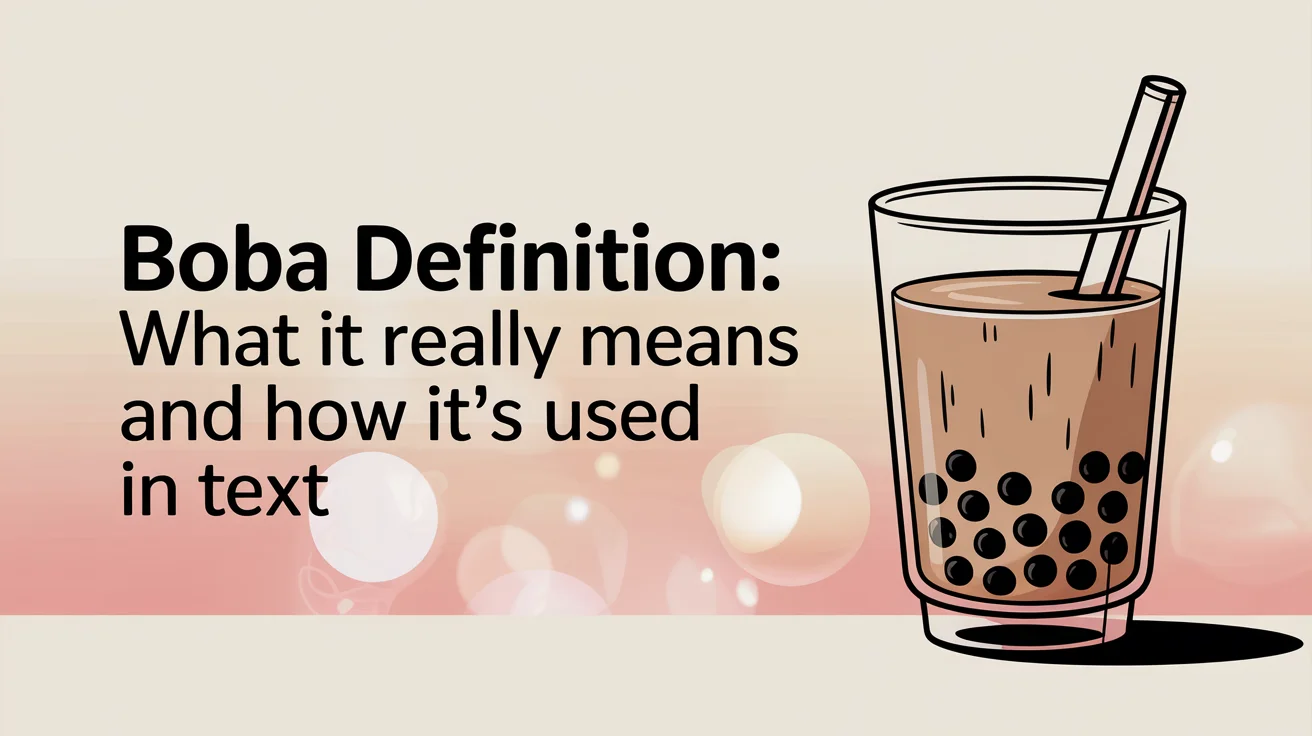
At its core, boba refers to tapioca pearls—small, chewy spheres made from tapioca starch. These pearls sit at the bottom of many bubble tea drinks and get sucked up through a wide straw.
That’s the original, literal meaning.
Over time, the word expanded. Today, people commonly use boba to mean:
- The tapioca pearls themselves
- A drink that contains tapioca pearls
- Bubble tea as a whole category
- A casual social activity involving bubble tea
Here’s the simplest way to think about it:
Boba started as the topping. Now it often means the entire experience.
The Ingredients That Make Boba What It Is
To understand the definition properly, it helps to know what boba is made from.
Classic boba pearls contain:
- Tapioca starch (derived from cassava root)
- Water
- Brown sugar or caramelized sugar
After cooking, the pearls turn glossy, elastic, and slightly sweet. The texture matters just as much as the flavor. In fact, texture is the whole point.
Many fans describe good boba as:
- Chewy but soft
- Springy, not mushy
- Sweet without overpowering the drink
Bad boba, on the other hand, ruins everything.
Origin of the Word “Boba”
The word boba comes from Taiwanese slang.
In Mandarin, bō bà originally referred to something round and plump. Colloquially, it even acted as slang for large pearls or balls. When tapioca pearls became popular in milk tea during the late 1980s in Taiwan, the nickname stuck.
Bubble tea itself originated in Taiwan, with two cities—Taichung and Tainan—both claiming to have invented it. Regardless of which story you believe, one thing is certain: boba culture exploded fast.
As Taiwanese immigrants opened tea shops abroad, the word boba traveled with them.
How “Boba” Spread Outside Taiwan
When bubble tea reached the United States in the 1990s, language played a role in how it was marketed.
In many Asian communities, boba still meant the pearls specifically. But English speakers found the word catchy. Short. Fun to say.
Over time, boba became shorthand for:
- “Bubble tea”
- “Milk tea with toppings”
- “That drink with the balls”
Language did what language always does. It adapted.
Boba vs Bubble Tea: Is There a Difference?
Yes—and no.
Technically speaking, there is a difference. In everyday conversation, most people ignore it.
The Technical Difference
| Term | What It Refers To |
| Boba | Tapioca pearls |
| Bubble tea | The drink category |
| Pearl milk tea | Milk tea with tapioca pearls |
How People Actually Use the Words
In real life, especially in the U.S., boba usually means bubble tea.
If someone says, “Let’s get boba,” they don’t mean they want a cup of pearls with nothing else. They mean the drink. The shop. The experience.
Language favors convenience over precision.
Regional Differences in Usage
Where you are affects how people use the word.
In Taiwan and parts of East Asia:
- Bubble tea refers to the drink
- Boba refers to the pearls
In the United States:
- Boba often means bubble tea
- The distinction matters less
In online spaces:
- Boba doubles as slang for social plans
None of these are wrong. They just reflect different linguistic habits.
What Does “Boba” Mean in Texting?
This is where things get interesting.
In texts, boba rarely means just the drink. It often functions as a social signal.
When someone texts:
“Wanna get boba?”
They’re usually saying more than they’re saying.
Depending on context, it can mean:
- Let’s hang out casually
- Let’s talk one-on-one
- Let’s go somewhere low-pressure
- Let’s do something simple but social
Boba works well in texts because it feels light. No commitment. No expectations. No pressure.
Why Boba Became Text-Friendly Slang
Boba fits modern communication habits perfectly.
It’s:
- Casual
- Affordable
- Short in duration
- Easy to say yes or no to
Unlike dinner plans, boba doesn’t feel heavy. Unlike coffee, it carries cultural flair. Unlike alcohol, it stays accessible to all ages.
That’s why people use it as a default social invite.
Common Texting Examples Using “Boba”
Here’s how boba shows up in real messages.
Friendly hangout
“I’m free later if you wanna grab boba.”
Casual check-in
“Long week. Boba run?”
Low-pressure date
“There’s a new boba spot nearby. Want to check it out?”
Group plans
“Boba after class?”
Same word. Different energy. Context does the heavy lifting.
Cultural Significance of Boba Today
Boba is no longer just a drink. It’s a cultural marker.
For many people, especially Gen Z and younger millennials, boba represents:
- Community
- Comfort
- Identity
- Routine
Boba shops act as third spaces—places that aren’t home or work but still feel familiar. They’re where people study, gossip, flirt, decompress, and exist.
Boba as a Lifestyle Symbol
On social media, boba shows up everywhere.
- Instagram photos
- TikTok reviews
- Aesthetic café shots
- Late-night cravings
The drink became a visual shorthand for modern urban life. Holding a boba cup says something without saying anything.
Common Misunderstandings About Boba
Despite its popularity, confusion persists.
“Boba Is a Flavor”
Incorrect. Boba is a topping. The flavor comes from the tea or syrup.
“All Boba Is the Same”
Not even close. Texture, sweetness, freshness, and size vary widely.
“Boba Always Means Milk Tea”
No. Fruit teas, slushes, and even coffee drinks use boba.
Variations and Related Terms You’ll See Online
Boba evolved. The vocabulary expanded with it.
Common related terms include:
- Popping boba – Juice-filled spheres that burst when bitten
- Milk tea – Tea mixed with milk or creamer
- Fruit tea – Tea infused with fruit flavors
- Grass jelly – Herbal jelly topping
- Aloe cubes – Light, refreshing add-ins
Each topping changes the drink’s texture and feel.
How to Use the Word “Boba” Correctly
Using boba correctly depends on setting.
In casual conversation
- “Let’s get boba” works perfectly
When being precise
- Say “bubble tea” or “milk tea with boba”
In texting
- Treat it as a social noun, not just a drink
Avoid overthinking it. Native usage matters more than dictionary definitions.
Quick Reference: Boba Meanings by Context
| Context | Meaning |
| Food | Tapioca pearls |
| Drink | Bubble tea |
| Texting | Casual hangout |
| Culture | Social ritual |
What “Boba” Really Means Today
Today, boba means more than what’s in the cup.
It’s texture.
It’s timing.
It’s company.
The word evolved because people needed it to. It became flexible, expressive, and useful in ways a strict definition never could be.
So next time someone asks if you want boba, listen closely.
They might be asking for more than a drink.
FAQs:
What is the basic definition of boba?
Boba originally refers to tapioca pearls made from cassava starch. These chewy pearls sit at the bottom of many bubble tea drinks and get consumed through a wide straw. Over time, the word expanded beyond the ingredient itself.
Is boba the same thing as bubble tea?
Not exactly, but people often use the terms interchangeably. Bubble tea describes the drink category, while boba technically refers to the pearls. In everyday US English, saying “boba” usually means the entire drink.
Why do people say “get boba” instead of “get bubble tea”?
Because it’s shorter, more casual, and culturally loaded. “Get boba” sounds friendly and relaxed. It also implies a social activity, not just a beverage purchase.
What does boba mean in texting?
In texts, boba often means hanging out. It’s a low-pressure invitation that suggests conversation, downtime, or a casual meetup. The drink matters less than the time spent together.
Is boba always milk tea?
No. Many boba drinks contain fruit tea, green tea, black tea, or even coffee. Milk tea is popular, but it’s only one option.
What’s the difference between boba and popping boba?
Classic boba is chewy tapioca. Popping boba is filled with juice and bursts when bitten. The texture and experience are completely different.
Is boba a slang word?
Originally, no. Today, it functions as casual slang in social and digital contexts, especially among younger generations.
Can boba mean something romantic in a text?
Sometimes. Inviting someone for boba can signal interest because it’s informal and one-on-one friendly. That said, context always decides the meaning.
Conclusion:
The meaning of boba didn’t change overnight. It stretched, adapted, and absorbed culture along the way.
At its core, boba still means tapioca pearls. That definition hasn’t disappeared. But modern usage added layers. Now the word can describe a drink, a meetup, a routine, or even a vibe.
Language evolves when people need it to. Boba became useful because it’s flexible. It fits in menus, texts, group chats, and daily conversations without effort.

Olivia is a creative voice at Captioniy.com. She blends modern style with expressive writing to deliver Instagram captions that feel trendy and unique.