
Words shape how people understand time, intention, and closure. That’s why confusion between bookend meaning and hiatus meaning causes real misunderstandings. These two terms appear everywhere—media announcements, essays, workplace updates, and personal conversations. Yet they do very different jobs.
This article breaks down bookend meaning and hiatus meaning with clarity and depth. You’ll see how each word works, where people go wrong, and how to use both with confidence. No filler. No vague explanations. Just real language, real examples, and practical guidance.
By the end, you’ll know exactly which word fits your sentence—and why.
What Does Bookend Mean?
The bookend meaning starts with something physical and ends with something deeply metaphorical.
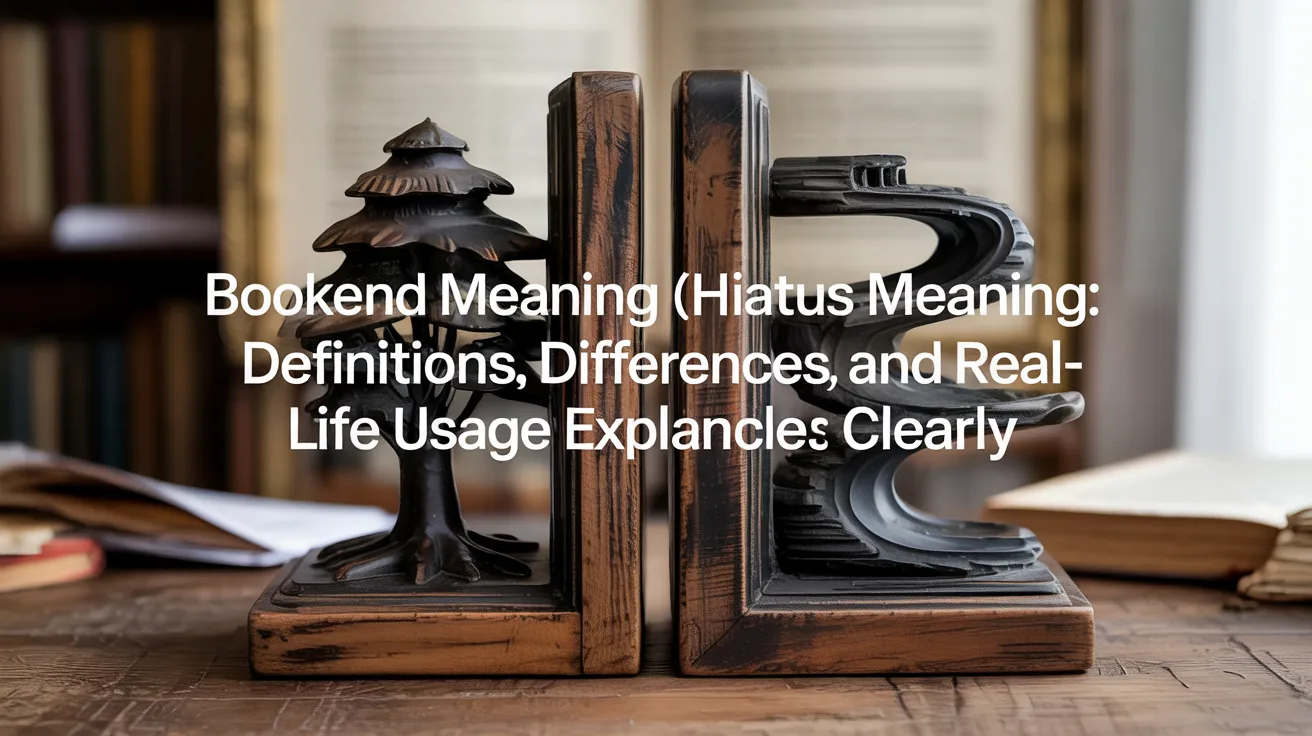
A bookend is an object placed at each end of a row of books to keep them upright. That simple idea evolved into a figurative term used to describe how events, ideas, or moments frame a larger whole.
Bookend Meaning in Simple Terms
Bookend refers to something that appears at the beginning and the end of a period, story, or experience.
It does not mean a pause.
It does not mean a break.
It means structure, framing, and symmetry.
When two related elements surround something in the middle, they bookend it.
Bookend as a Noun
As a noun, bookend refers to the framing elements themselves.
Examples
- Birth and death are the bookends of human life.
- The two speeches served as bookends for the conference.
Bookend as a Verb
As a verb, bookend means to frame something with two similar or related moments.
Examples
- The decade was bookended by economic crises.
- Her career was bookended by award-winning performances.
Bookend Meaning in Figurative Language
Most modern uses of bookend are figurative. Writers, analysts, and speakers rely on it to show intentional design and narrative balance.
Why Writers Use the Word “Bookend”
Bookend implies:
- Deliberate structure
- Clear boundaries
- Emotional or thematic closure
It signals that the beginning and the ending are connected—and meaningful.
Common Figurative Uses of Bookend
- Storytelling: Opening and closing scenes mirror each other
- History: Major events define the start and end of an era
- Personal life: Milestones frame long journeys
Example
“The company’s founding and eventual acquisition bookended forty years of innovation.”
That sentence describes definition, not interruption.
What Does Hiatus Mean?
Now let’s clarify the second half of the equation.
The hiatus meaning is precise and time-focused.
Hiatus Meaning in Plain English
A hiatus is a temporary pause, taken with the intention to resume later.
That expectation of return is essential. Without it, the word doesn’t apply.
Core Characteristics of a Hiatus
- Temporary, not permanent
- Intentional, not accidental
- Often planned or announced
If there’s no plan to come back, it isn’t a hiatus.
Where the Word Comes From
Hiatus comes from Latin, meaning “gap” or “opening.”
That origin still defines how the word functions today.
Hiatus Meaning in Modern Usage
The word hiatus has become far more common in everyday language, especially online.
Hiatus in Media and Entertainment
This is where most people encounter the term.
Examples
- A TV series goes on hiatus between seasons
- A podcast announces a three-month hiatus
- A YouTuber takes a hiatus to prevent burnout
In each case, the message is the same: This is temporary.
Hiatus in Work and Personal Life
The word also appears in professional and personal contexts.
- Career hiatus for education or caregiving
- Creative hiatus to regain inspiration
- Relationship hiatus, often emotionally complex
Important nuance
A hiatus implies intention, not outcome. Returning doesn’t guarantee success.
Bookend vs Hiatus: Key Differences Explained
Although people mix them up, these words serve different purposes.
The Core Difference
- Bookend describes position and framing
- Hiatus describes pause and interruption
They answer different questions.
| Aspect | Bookend Meaning | Hiatus Meaning |
| Main function | Framing start and end | Temporary pause |
| Implies return | No | Yes |
| Describes a gap | No | Yes |
| Common in analysis | Very common | Limited |
| Emotional tone | Reflective, structural | Transitional, uncertain |
A Simple Rule That Works
If you’re talking about stopping, use hiatus.
If you’re talking about framing, use bookend.
Can Bookend and Hiatus Be Used Together?
Yes—and when used correctly, they strengthen meaning instead of confusing it.
How They Work Together
A hiatus can exist between bookends.
Example
- The band’s early success and later reunion bookended a ten-year hiatus.
Here’s the structure:
- Early success = opening bookend
- Ten-year hiatus = pause in the middle
- Reunion = closing bookend
Each word keeps its own role.
Common Mistakes People Make With Bookend and Hiatus
Misusing these terms subtly changes meaning.
Mistake: Using Bookend to Mean Pause
Incorrect:
- “The show was bookended for six months.”
Correct:
- “The show went on hiatus for six months.”
Why it matters
Bookend does not describe duration or absence. Hiatus does.
Mistake: Using Hiatus to Describe an Ending
Incorrect:
- “She went on a hiatus from music and never returned.”
Correct:
- “She retired from music.”
A hiatus always implies a return.
Mistake: Using Both Words Without Purpose
Overusing these terms without understanding weakens clarity. Each word earns its place.
Read More”Hiatus Meaning: What It Really Means, How to Use It, and Why It Matters Today
Examples of Bookend in Sentences
Seeing real usage helps lock in meaning.
Everyday Examples
- Graduation and retirement bookend most careers.
- Sunrise and sunset bookend the day.
Professional and Analytical Examples
- The policy failures bookended a decade of reform.
- Two global crises bookended the economic cycle.
Creative Writing Examples
- The novel opens and closes with the same memory, bookending the story with regret.
Examples of Hiatus in Sentences
Hiatus appears most often in announcements and transitions.
Casual Use
- I’m taking a short hiatus from social media.
- The blog is on hiatus until spring.
Professional Use
- The company announced a strategic hiatus from expansion.
- She returned after a two-year career hiatus.
Media Use
- The series returns after a mid-season hiatus.
Synonyms and Related Terms (With Context)
Not every synonym fits every situation.
Synonyms for Bookend
- Frame
- Enclose
- Bracket
Caution
These work best in analytical or structural contexts.
Synonyms for Hiatus
- Break
- Pause
- Intermission
Key distinction
Break is informal. Hiatus sounds deliberate and professional.
Why These Words Matter in Clear Communication
Precision builds trust. Vague language does the opposite.
In Writing
- Bookend adds structure and meaning
- Hiatus sets expectations
In Speech
- Clear intent prevents misunderstanding
- Accurate words reduce confusion
A single wrong word can shift tone entirely.
When to Use Bookend vs Hiatus (Quick Guide)
Use bookend when:
- Two moments frame a larger period
- You’re describing structure or symmetry
- You want to highlight narrative design
Use hiatus when:
- Something pauses temporarily
- There’s an intention to resume
- You’re announcing absence
FAQs
Is bookend always metaphorical?
No. It can be literal or figurative, though figurative use is far more common.
Does hiatus always mean a return?
Yes. Without intent to return, the word is inaccurate.
Can people go on a hiatus?
Yes, especially in careers or creative work.
Is bookend formal or casual?
It fits both, though it appears more often in analytical writing.
Conclusion
The difference between bookend meaning and hiatus meaning comes down to purpose.Bookend defines boundaries.Hiatus defines pauses.One frames a story.The other interrupts it.When you use these words correctly, your writing gains clarity, authority, and confidence. And once you understand the distinction, you’ll notice how often others get it wrong.

Emily is a passionate writer at Captioniy.com who loves turning emotions into words. She creates heartfelt Instagram captions and short quotes that make every post special.