“Down to earth” is one of those idioms you hear everywhere — in conversations, articles, interviews, and even job descriptions. But what does it really mean? Why do people use it? And how can you use it naturally in your own English?
This comprehensive guide breaks down the down to earth meaning, gives real examples, compares it with related expressions, and shows you how to use it confidently in real situations. Let’s dive in.
What Does “Down to Earth” Mean? A Clear and Simple Explanation
When we say someone is down to earth, we mean they are practical, realistic, friendly, and humble. These people don’t act like they’re better than others. They stay grounded, simple, and approachable.
Think of someone who stays calm in tough situations, listens more than they brag, and talks to everyone like a friend. That’s a down to earth person.
Plain English definition:
Down to earth — a person who is practical, humble, and easy to talk to.
Where Did “Down to Earth” Come From? A Look at Its History
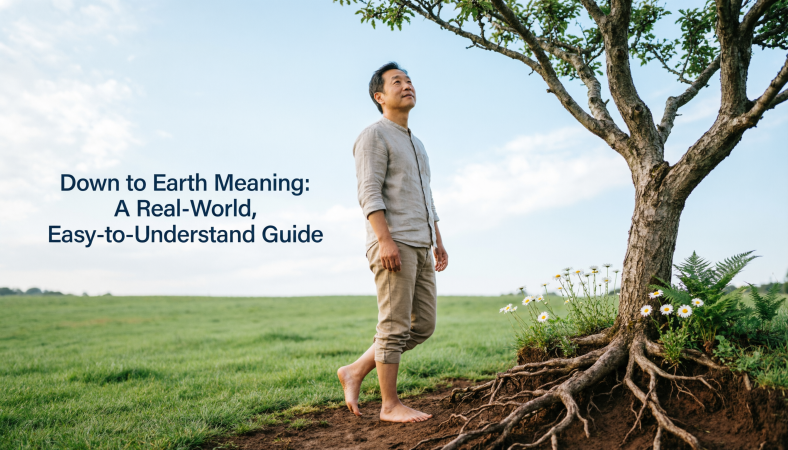
The phrase down to earth comes from the idea of someone being literally close to the ground, meaning solid and stable. It wasn’t always an idiom. Over time, people started using it not just to talk about physical closeness to the ground, but emotional or social groundedness too.
- “Earth” here symbolizes real life, reality, and practical thinking
- The phrase became a figurative expression in English in the early 20th century
Even though the literal origin is simple, the meaning stuck because it captures a quality people admire: realness.
How Native Speakers Use “Down to Earth” in Daily Conversations
You’ll hear it in conversations like:
- “I met the CEO — she was super down to earth!”
- “He’s famous, but still really down to earth.”
People use it to describe persons, not objects or places. It feels natural in spoken English and most informal writing.
Where It Works Best
- Conversations with friends
- Describing people (real or famous)
- Casual emails
- Interviews (spoken or quoted)
Where to Avoid It
- Very formal academic writing
- Technical documents where precision matters
What Traits Make Someone “Down to Earth”?
When someone is described as down to earth, they usually show several traits:
Key Traits
- Practical thinking — they deal with real problems, not fantasies
- Humility — they don’t brag about achievements
- Relatability — easy to talk to, no airs or arrogance
- Emotional balance — calm, steady, not dramatic
People respect these traits because they feel trustworthy and real.
Real-Life Examples: “Down to Earth” in Natural Sentences
Here are everyday sentences showing how we use this idiom:
- “My teacher is really down to earth — she explains things clearly.”
- “When we met, he acted super down to earth despite being famous.”
- “I like people who are down to earth; they don’t make others uncomfortable.”
These examples show how the phrase works in real speech.
Is “Down to Earth” Always a Compliment?
Mostly, yes — it’s a positive description. When you call someone down to earth, you’re usually praising them.
But tone and context matter. Sometimes, in a formal setting, it might feel too casual. Still, it’s almost never insulting.
Think of it like saying someone is easy to talk to and doesn’t act arrogant — that’s a good thing in most cultures.
Idioms Similar to “Down to Earth” (With Differences)
There are other idioms and expressions that seem similar at first but mean slightly different things.
| Expression | Meaning | Best Used For |
| Level-headed | Calm and sensible | Good during stress |
| Humble | Not proud or arrogant | Character trait |
| Easygoing | Relaxed and not strict | Personality style |
| Practical | Focus on real results | Problem-solving |
How They Compare
- Level-headed focuses more on calm logic.
- Humble focuses on modesty.
- Easygoing focuses on relaxed behavior.
- Practical focuses on realistic action.
Down to earth blends all these ideas — humility, realism, and friendliness — making it broad but meaningful.
Opposites of “Down to Earth” (With Examples)
When someone is not down to earth, they might be:
- Pretentious — acting more important than they are
- Out of touch — disconnected from reality
- High-maintenance — needing extra attention and care
- Unrealistic — thinking in ways that don’t match real life
Examples:
- “She seemed out of touch with the team’s real needs.”
- “That manager is so pretentious, it’s hard to work with them.”
These contrasts help you see down to earth more clearly.
Common Mistakes With “Down to Earth” and How to Avoid Them
Mistake #1: Using It for Objects
Wrong: This phone is very down to earth.
Right: He has a very down to earth attitude.
Mistake #2: Mixing It With Unrelated Idioms
Some people say down to the ground or grounded incorrectly when they mean down to earth.
Mistake #3: Overusing It
Using it too much makes writing sound repetitive. Use synonyms when appropriate.
American vs. British English: Any Difference in Usage?
Both American and British English use down to earth in the same way. There’s no major difference in meaning.
However, British speakers sometimes use similar expressions like:
- Grounded
- Realistic
The subtle nuance is context, not meaning.
Read More: Chromakopia Meaning (Hiatus Meaning): A Clear, Context-Driven Guide With Real Examples
Can You Use “Down to Earth” in Professional Settings?
Yes — if the situation fits.
Good in
- Job interviews (when describing your approach)
- Performance reviews (about teamwork or leadership)
- Emails praising teamwork
Be Careful With
- Extremely formal reports
- Academic papers
- Technical documents
Example in a professional email:
“Our new project manager is very down to earth, which helps our team communicate better.”
That sounds human and respectful.
Idioms Related to Personality: Quick Grouping
Here are expressions often grouped with down to earth:
Calm and Practical
- Level-headed
- Grounded
Friendly and Approachable
- Easygoing
- Warm-hearted
Realistic and Sensible
- Realistic
- Practical-minded
Case Studies: “Down to Earth” in the Real World
Case Study 1: CEO in a Startup
At a tech conference, a famous CEO chose to sit with interns instead of VIPs. Reporters called her down to earth. People trusted her more because she acted relatable, not distant.
Case Study 2: Teacher in a Classroom
Students described a teacher as down to earth because she explained hard topics with real-life stories instead of complex language. That increased students’ confidence.
Case Study 3: Public Figure in Media
An actor refused red carpet glamour and talked openly about challenges. Fans praised him for being down to earth — human, real, honest.
How to Sound Natural With Idioms Like “Down to Earth”
Here are practical tips:
- Match the tone to the situation — use it in friendly or semi-formal contexts
- Don’t force idioms — if a simple phrase works, choose that
- Learn examples first — mimic natural use before creating your own
- Pair with real situations — it helps you remember meaning
Why Native Speakers Love This Idiom
Native speakers like down to earth because it:
- Tells you about a person’s heart, not just their surface
- Feels warm and human, not cold
- Works in many real-life situations
It’s simple but descriptive — the kind of phrase that sticks.
Quick Recap: Using “Down to Earth” the Right Way
Here’s the short version of what we covered:
- Meaning: Practical, humble, approachable
- Use it for people, not objects
- Mostly positive, sometimes casual
- Works in everyday speech and many professional chats
- Avoid formal academic use
FAQ: Quick Answers to Common Questions
Q: What does down to earth mean in simple words?
A: Someone who is real, humble, and easy to talk to.
Q: Is down to earth formal or informal?
A: Mostly informal, but acceptable in many professional settings.
Q: Can I describe myself as down to earth?
A: Yes, but it’s best to let others say it about you.
Q: Is it a positive trait?
A: Almost always, yes.
Q: What’s the closest synonym?
A: Realistic or humble.
Final Thought
Understanding the down to earth meaning gives you more than vocabulary — it gives you insight into how people describe character and behavior in English.
Use it wisely, keep it real, and watch how naturally your English will flow in everyday chats.

Sophia adds humor and confidence to Captioniy.com. Her witty Instagram captions and bold quotes help readers make their posts stand out.