Short messages move fast. Attention spans shrink. And somehow, three tiny letters—HBU—manage to show up everywhere. Texts. Instagram DMs. Dating apps. Comment sections. Group chats that never sleep.
You’ve probably seen it. You might’ve used it. Or maybe you paused, wondering what it really means and whether replying with it makes you sound careless.
This guide clears the fog.
You’ll learn the exact HBU meaning, how people actually use it in real conversations, when it works, when it backfires, and which alternatives sound better depending on who you’re talking to. No fluff. No filler. Just clear, practical insight you can use right away.
What Does HBU Mean?
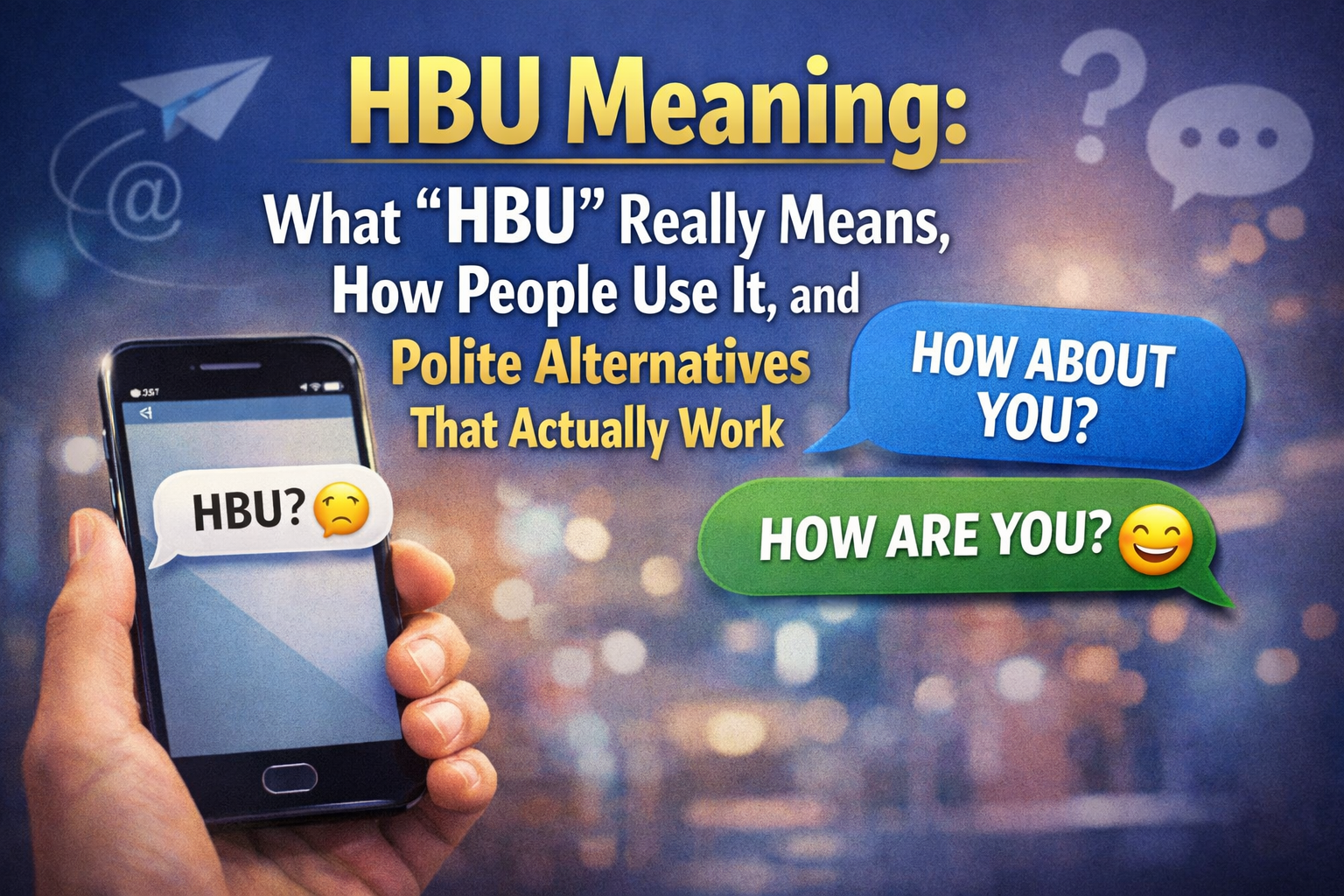
HBU stands for “How about you?”
That’s it. No hidden layers. No secret slang origin.
People use HBU as a quick follow-up question after answering something about themselves. It flips the conversation back to the other person without typing a full sentence.
Simple example
- “I’m doing good today, hbu?”
- “I love horror movies. HBU?”
In both cases, HBU replaces “How about you?” while keeping the conversation moving.
Why People Use HBU Instead of the Full Phrase
Speed matters in digital conversations. Typing fewer characters saves time and keeps chats light.
Here’s why HBU stuck around:
- It’s short and efficient
- It feels casual and friendly
- It matches the rhythm of texting culture
- It signals interest without effort overload
In fast-paced chats, longer sentences can feel heavy. HBU keeps things breezy.
Where HBU Is Commonly Used
You’ll see HBU in places where conversations are informal and relaxed.
Text messages
Friends, family, coworkers you know well. It fits naturally into everyday texting.
Social media
Instagram DMs, Snapchat, TikTok comments, Twitter replies. Short responses thrive here.
Dating apps
Tinder, Bumble, Hinge. People often use HBU to keep chats alive without sounding too intense.
Online communities
Reddit, Discord, gaming chats. Casual tone rules, and abbreviations feel normal.
Where it’s rarely used
- Professional emails
- Formal messages
- Academic writing
- Customer support conversations
In those spaces, HBU can feel rushed or unprofessional.
The Real Intent Behind “HBU”
Words matter, but intent matters more.
HBU as a sign of interest
When someone says “hbu?”, they often want your input. It’s conversational ping-pong.
HBU as a polite habit
Some people use it automatically, the same way others say “and you?”
HBU as conversation filler
Sometimes it’s used to avoid silence, not to dig deeper.
Tone changes everything
- Warm tone + HBU = friendly
- Flat replies + HBU = indifferent
- One-word answers + HBU = low effort
Context decides meaning.
Is HBU Rude or Polite?
HBU isn’t rude by default. But it can feel lazy in the wrong setting.
When HBU feels polite
- Casual chats with friends
- Ongoing conversations
- Social media exchanges
- Dating app messages after rapport
When HBU feels off
- First impressions
- Serious conversations
- Work-related discussions
- Emotional topics
Some people prefer full sentences because they feel more thoughtful.
Generational difference
- Younger users see it as normal
- Older users may see it as abrupt
- Professional settings expect clarity
No word is rude on its own. Delivery decides perception.
When You Should Avoid Using HBU
There are moments where shortcuts hurt more than help.
Professional communication
Emails, Slack messages to managers, client conversations. Use complete sentences.
Formal introductions
First-time messages benefit from warmth and clarity.
Serious or emotional topics
Abbreviations can feel dismissive when emotions run high.
Customer-facing roles
Polished language builds trust.
Rule of thumb:
If tone matters more than speed, skip HBU.
Polite and Natural Alternatives to HBU
Sometimes you want the same meaning without the shorthand. These alternatives keep conversations smooth.
Casual alternatives
- How about you?
- What about you?
- And you?
Neutral everyday options
- What’s your take?
- How do you feel about it?
- What do you think?
Polite and professional alternatives
- I’d love to hear your thoughts.
- How has your experience been?
- What’s your perspective on this?
Quick comparison table
| Phrase | Tone | Best Used For |
| HBU | Casual | Friends, social chats |
| How about you? | Neutral | Most conversations |
| And you? | Friendly | Light exchanges |
| I’d love your thoughts | Polite | Professional settings |
Choosing the right phrase improves how people perceive you.
How to Respond When Someone Says “HBU”
You don’t need to mirror their style, but you should respond thoughtfully.
Simple response
- “I’m good too, thanks!”
- “Pretty busy, but in a good way.”
Conversation-expanding response
- “I’m doing well. Just wrapped up a project I’m excited about.”
- “Doing great—trying a new routine lately.”
When you’re busy
- “Doing okay. Can reply properly later.”
- “All good, just swamped right now.”
Short doesn’t mean shallow. Add a detail and keep the flow alive.
Common Misunderstandings About HBU
“HBU is always lazy”
Not true. Context matters.
“HBU sounds rude”
Only when tone or timing clashes.
“HBU ends conversations”
Actually, it often keeps them going.
Misreading intent causes more friction than the abbreviation itself.
Read More:Big Back Meaning: Understanding the Slang, Its Usage, and Social Impact
HBU vs Similar Slang Terms
Understanding related phrases helps you choose wisely.
HBU vs HRU
- HRU = How are you?
- HBU = Follow-up question
HBU vs WYD
- WYD focuses on activity
- HBU reflects interest in response
HBU vs And you
- HBU is casual
- And you feels slightly warmer
Each shapes conversation flow differently.
Quick Do’s and Don’ts for Using HBU
Do
- Use it with people you know
- Match the tone of the conversation
- Add context when needed
Don’t
- Use it in professional emails
- Rely on it constantly
- Use it in serious discussions
Moderation makes it effective.
Mini Case Study: HBU in Dating App Conversations
Dating apps thrive on quick exchanges.
Low-effort chat
“I’m good hbu”
Improved version
“I’m good—just got back from a hike. HBU?”
Adding one detail increases engagement and reply rates.
What Linguists Say About Abbreviations
Language adapts to its environment.
“Digital shorthand reflects efficiency, not a decline in communication skills.”
— Dr. Naomi Baron, linguistics professor
Short forms like HBU exist because people prioritize speed and connection.
Should You Use HBU or Skip It?
Use HBU when:
- The conversation is casual
- You know the person
- Speed matters
Avoid it when:
- Tone needs care
- Professional image matters
- Emotional nuance is important
The smartest communicators adjust language based on audience.
FAQs
What does HBU mean in texting?
It means “How about you?”, used as a follow-up question.
Is HBU appropriate for work messages?
Usually no. Full sentences work better professionally.
Can HBU sound rude?
Yes. Especially in serious or first-time conversations.
What’s a polite replacement for HBU?
“How about you?” or “I’d love to hear your thoughts.”
Is HBU still popular in 2026?
Yes. It remains common in casual digital communication.

Olivia is a creative voice at Captioniy.com. She blends modern style with expressive writing to deliver Instagram captions that feel trendy and unique.