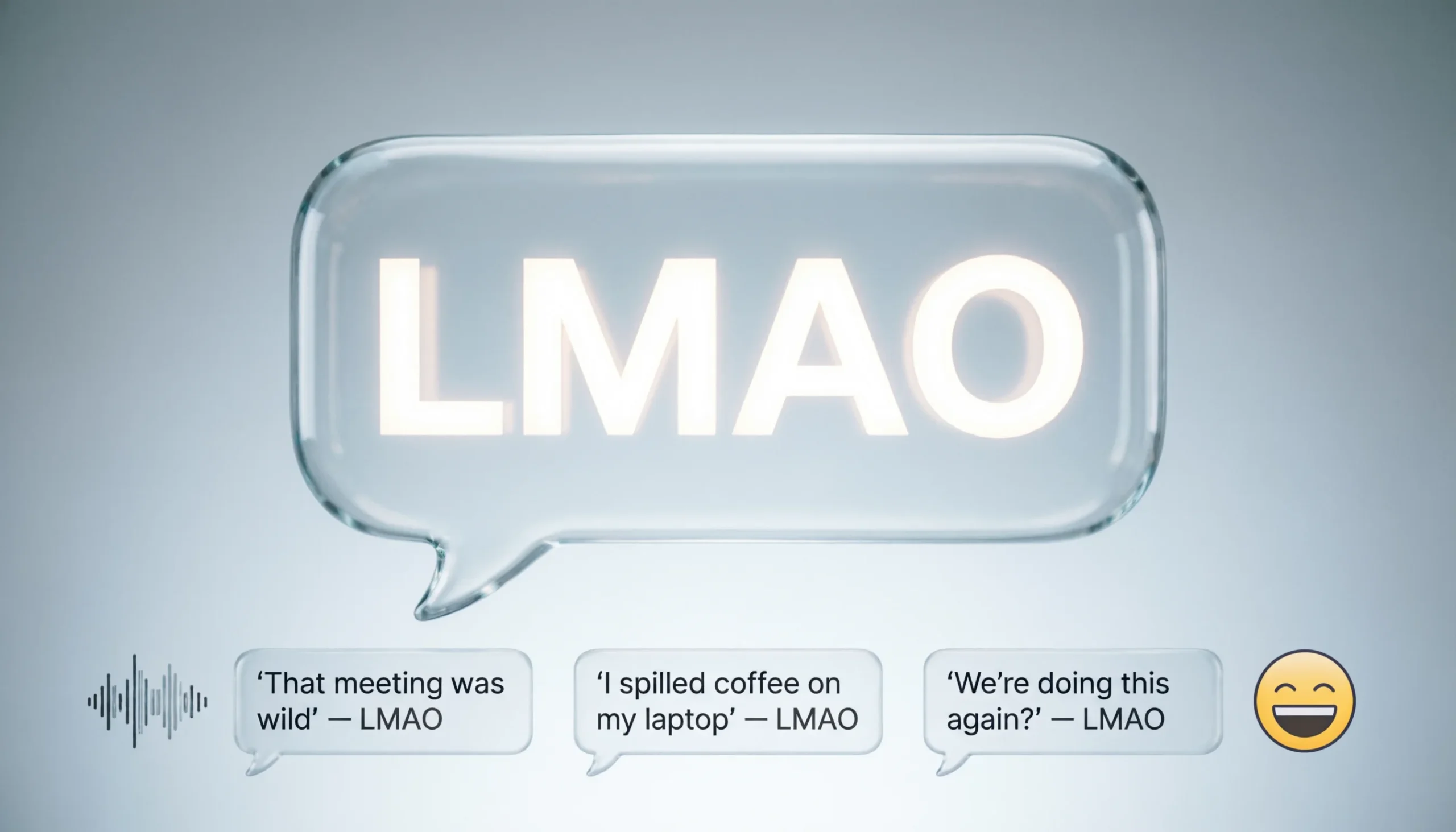
You’ve probably typed LMAO without thinking twice. It pops up in group chats, meme comments, gaming threads, and late-night conversations. On the surface, it simply means laughing hard. However, the real LMAO meaning goes beyond laughter. It signals tone, personality, and even social awareness in digital spaces where context is thin and misunderstandings happen fast.
Text communication strips away facial expressions and vocal cues. Because of that, we rely on shortcuts like LMAO to inject emotion back into our messages. One small acronym can soften sarcasm, exaggerate humor, or accidentally make you sound insensitive. The difference often comes down to timing and relationship. Used correctly, it builds connection. Used carelessly, it creates friction.
This guide breaks down LMAO meaning in text, its origin, how people use it today, and when you should avoid it. You’ll also discover smarter alternatives for professional and sensitive situations. By the end, you won’t just know what LMAO stands for. You’ll know exactly when it works—and when it doesn’t.
What Does LMAO Mean?
LMAO stands for “Laughing My Ass Off.”
It expresses strong laughter. Not a polite smile. Not mild amusement. Real, exaggerated laughter.
When someone types LMAO, they’re signaling:
- That was extremely funny
- I’m reacting emotionally
- I’m exaggerating for humor
- I want you to know I’m entertained
However, don’t take it literally. Most people aren’t physically laughing that hard. It’s digital hyperbole. Think of it as laughter turned up to max volume.
Quick Definition Table
| Term | Full Form | Emotional Intensity | Tone | Common Use |
| LOL | Laughing Out Loud | Mild | Neutral | Casual texts |
| HAHA | — | Moderate | Friendly | Everyday chat |
| LMAO | Laughing My Ass Off | Strong | Very casual | Friends, memes |
| ROFL | Rolling On the Floor Laughing | Dramatic | Exaggerated | Internet humor |
| LMFAO | Laughing My Freaking Ass Off | Extreme | Highly informal | Meme culture |
Notice something? The stronger the acronym, the less formal it becomes.
Where Did LMAO Come From?
To understand LMAO meaning, you need context.
The acronym gained traction in the early internet era. During the late 1990s and early 2000s, users gathered in:
- AOL chat rooms
- MSN Messenger
- Yahoo Messenger
- Early online forums
Back then, texting had a strict 160-character limit. People shortened everything. Efficiency ruled.
Instead of typing “That’s hilarious, I’m laughing so hard,” users typed “LMAO.”
It saved space. It felt expressive. It spread fast.
As internet slang evolved, LMAO became a cultural staple. Memes amplified it. Reaction GIFs reinforced it. Eventually, emojis joined the mix.
Today, it competes with:
- 😂 (Face with Tears of Joy)
- 💀 (Skull, meaning “I’m dead from laughing”)
- “I can’t”
Language adapts. But LMAO still holds power.
How People Use LMAO Today
Language doesn’t live in dictionaries. It lives in conversations. Let’s look at how people actually use LMAO in real situations.
LMAO in Casual Texting
Example:
“You really tried to microwave ice cream? LMAO.”
That tone feels playful. It works because there’s shared context.
When texting friends, LMAO signals comfort. It says, “We’re relaxed here.”
But context matters.
If someone texts:
“I just embarrassed myself in front of my boss.”
Replying with “LMAO” feels cold. Tone shifts quickly.
LMAO on Social Media
Scroll through TikTok comments or X threads. You’ll see LMAO everywhere.
Common uses include:
- Reacting to a viral fail
- Responding to satire
- Amplifying sarcasm
- Joining a meme trend
For example:
“He thought the Earth was flat and brought a level to the beach. LMAO.”
In public spaces, LMAO becomes performance laughter. It signals group alignment.
LMAO in Gaming Communities
Gaming culture thrives on instant reactions.
During live matches, players type:
- “LMAO what was that move?”
- “You missed that shot LMAO.”
Here, tone often blends humor with competitive teasing. However, it can easily cross into mockery.
Digital environments amplify exaggeration.
LMAO Meaning and Tone: When It Sounds Funny vs Offensive
Tone carries weight. Especially in text.
Without facial expressions or voice inflection, readers interpret meaning based on context alone.
When LMAO Feels Safe
- You’re talking to close friends
- Everyone understands the joke
- The situation is clearly lighthearted
- You share a casual relationship
In these cases, LMAO strengthens connection.
When LMAO Feels Rude
- Someone expresses vulnerability
- You’re in a professional setting
- Cultural expectations differ
- The humor feels one-sided
Case Study
Scenario:
A coworker says, “I accidentally sent the wrong attachment to the client.”
Response A:
“LMAO.”
Response B:
“Oh no, that’s stressful. Were you able to fix it?”
Response A feels dismissive. Response B shows empathy.
Digital communication demands emotional intelligence.
LMAO vs LOL vs HAHA: The Real Difference
Many people treat these as interchangeable. They’re not.
Each conveys subtle emotional nuance.
| Expression | Meaning | Energy Level | Social Risk |
| LOL | Polite acknowledgment | Low | Minimal |
| HAHA | Genuine laughter | Medium | Low |
| LMAO | Intense or exaggerated laughter | High | Moderate |
| ROFL | Dramatic exaggeration | Very High | High |
Think of it like volume control.
- LOL = Background laughter
- HAHA = Normal laugh
- LMAO = Loud burst
- ROFL = Theater performance
Choose wisely.
Is LMAO Rude?
Short answer? It depends.
The phrase contains the word “ass.” That alone makes it vulgar in formal environments.
However, in casual culture, most people don’t interpret it literally.
Generational Perception
- Gen Z often replaces LMAO with 💀
- Millennials grew up using LMAO frequently
- Gen X may prefer HAHA
- Boomers sometimes misinterpret it
Cultural context matters too. What feels harmless in one country may sound crude in another.
If you wouldn’t say it out loud in a meeting, don’t type it in a meeting.
Read More: HMU Meaning: What It Really Means, How to Use It, and When to Avoid It
Polite Alternatives to LMAO
You don’t have to eliminate humor. You just need better phrasing for certain situations.
Professional Settings
Instead of LMAO, try:
- “That’s hilarious.”
- “That gave me a good laugh.”
- “I appreciate the humor.”
These keep warmth without vulgarity.
Semi-Casual Conversations
- “Haha that’s funny.”
- “I’m cracking up.”
- “That’s too good.”
- “You’re joking.”
Still relaxed. Less aggressive.
Sensitive Situations
When someone feels embarrassed or vulnerable:
- “Oh wow.”
- “That sounds rough.”
- “I didn’t expect that.”
- “Are you okay?”
Empathy beats exaggeration every time.
LMAO in Pop Culture
Internet culture thrives on exaggeration. LMAO became shorthand for “this is absurd.”
Memes fuel its survival.
Reaction culture rewards dramatic expression. The more extreme your response sounds, the more attention it grabs.
However, emoji culture now competes strongly.
Today, younger users lean toward 💀 to signal “I’m dead from laughing.”
Language never stands still.
Why We Exaggerate Laughter Online
Here’s something interesting.
Text removes body language. You lose:
- Facial cues
- Tone shifts
- Voice inflection
So people compensate.
They exaggerate.
Saying “LMAO” fills the emotional gap. It amplifies intent.
Psychologists call this emotional signaling in low-cue environments. When context shrinks, language expands.
Exaggerated acronyms become digital body language.
Should You Still Use LMAO?
Yes. But selectively.
Ask yourself:
- Who am I talking to?
- What’s the emotional tone?
- Could this be misread?
- Is this professional?
If you hesitate, choose a softer option.
Communication isn’t about sounding trendy. It’s about being understood.
Quick Usage Checklist
Before typing LMAO, run through this:
- Is this clearly a joke?
- Are we equals socially?
- Is the environment casual?
- Would I say this face-to-face?
If the answer is yes, you’re safe.
If not, pivot.
Frequently Asked Questions About LMAO Meaning
What does LMAO mean in text?
It means “Laughing My Ass Off.” It expresses strong laughter or exaggerated amusement.
Is LMAO appropriate at work?
Usually no. Professional communication benefits from neutral language. Use “That’s funny” instead.
What’s stronger than LMAO?
ROFL or LMFAO suggest even greater exaggeration. However, they sound more informal.
Is LMAO outdated?
Not entirely. Millennials still use it regularly. Gen Z prefers emojis like 💀, though LMAO remains common.
What does LMAO mean from a girl?
It means the same thing it means from anyone. Tone depends on context, not gender.
Conclusion
LMAO meaning may seem simple on the surface, yet its impact runs deeper than most people realize. It expresses strong laughter, exaggeration, and emotional reaction in a space where tone often gets lost. When you use it with close friends in a clearly humorous moment, it strengthens connection and signals comfort. However, in professional or sensitive situations, the same acronym can feel careless or dismissive. Context always determines whether it lands well or falls flat.
At the end of the day, digital communication works best when you read the room and match your tone to the moment. Sometimes LMAO fits perfectly. Other times, a simple “that’s funny” or a thoughtful response works better. Choose words that reflect awareness, not habit. When you understand how tone shapes perception, you don’t just text—you communicate with intention.

Daniel believes in the power of simplicity. At Captioniy.com, he writes short and clear Instagram captions that are easy to share and always impactful.