You’ve probably heard someone say Mashallah after seeing a beautiful baby, a new house, or a major achievement. Maybe you’ve typed it in a comment. Maybe someone said it to you and you smiled without fully knowing why. So what does Mashallah really mean? More importantly, why do millions of people use it every single day?
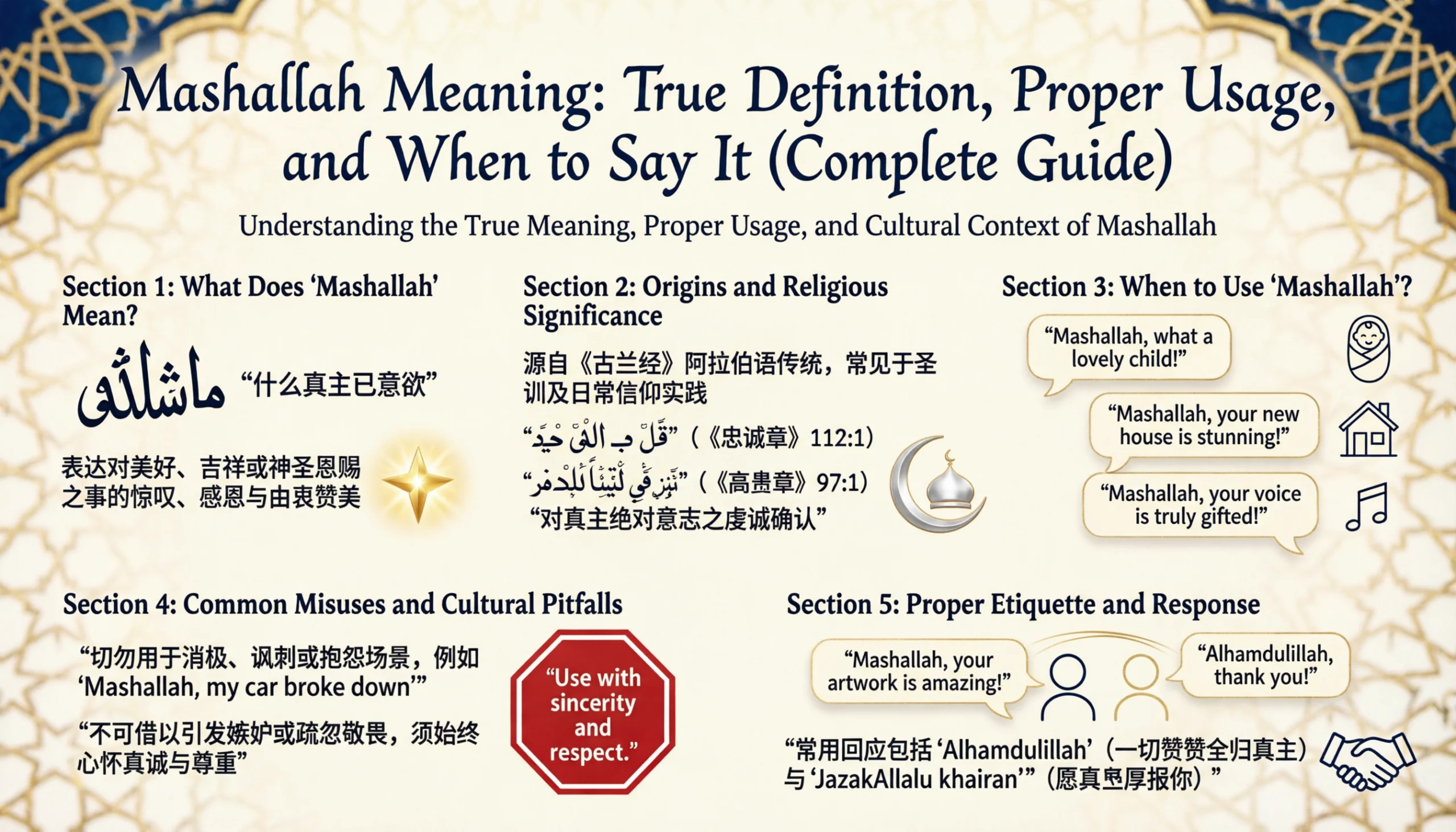
At its core, the Mashallah meaning is simple. It translates to “What Allah has willed.” Yet that short definition doesn’t capture its emotional weight. When someone says Mashallah, they’re not just offering a compliment. They’re expressing admiration while acknowledging that success, beauty, and blessings come from God. It blends joy with humility. It turns praise into gratitude.
Understanding Mashallah changes how you hear it. Suddenly, it’s not just a cultural phrase. It becomes a powerful reminder. A reminder that achievements aren’t purely human effort. A reminder that admiration should never slip into envy. And a reminder that gratitude protects what you value most.
What Does Mashallah Mean? (Clear Definition)
The phrase Mashallah comes from Arabic:
ما شاء الله
It breaks down into three parts:
| Arabic Word | Transliteration | Meaning |
| ما | Ma | What |
| شاء | Shaa | Has willed |
| الله | Allah | God |
Put together, Mashallah means “What Allah has willed.”
In smoother English, it can mean:
- “This is what God has willed.”
- “As God has willed.”
- “God has willed it so.”
However, context shapes meaning.
When someone says:
“Mashallah, your son is very intelligent.”
They aren’t just stating divine will. They are expressing admiration while acknowledging that the success comes from God.
That balance matters.
Mashallah shifts praise from human effort alone to divine blessing. It keeps admiration humble. It adds spiritual awareness to everyday compliments.
How Do You Pronounce Mashallah Correctly?
Many people mispronounce it. That’s normal.
The correct pronunciation is:
mah-shah-ALL-ah
Break it into beats:
- mah
- shah
- ALL
- ah
The stress falls on “ALL.”
Common mistakes include:
- “muh-shuh-lah”
- “mash-ala”
- “mashalla”
Regional variations exist. In South Asia, people often say “Mashalla.” In Turkey, you may hear “Maşallah.” In the Middle East, pronunciation tends to sound sharper and clearer.
But here’s what matters most.
You don’t need perfect Arabic fluency. You need respectful intention.
What Does Mashallah Mean in Islam?
Now we go deeper.
The Mashallah meaning in Islam connects directly to the Qur’an.
In Qur’an, Surah Al-Kahf (18:39), it says:
“Why did you not say, when you entered your garden, ‘Mashallah, there is no power except with Allah’?”
You can read it directly at This verse teaches something powerful.
When you see something beautiful or impressive, you should acknowledge that it exists by Allah’s will. That mindset protects the heart from arrogance. It also protects others from envy.
The Evil Eye Concept
Islamic tradition recognizes the concept of ‘ayn — the evil eye.
The Prophet Muhammad ﷺ said:
“The evil eye is real.”
This belief doesn’t promote superstition. Instead, it encourages humility and spiritual awareness.
When someone says Mashallah after praising something, they:
- Admire it
- Attribute it to Allah
- Avoid harmful envy
It’s admiration wrapped in humility.
Why Do People Say Mashallah? Real-Life Contexts
You’ll hear Mashallah in everyday conversations. Let’s explore practical situations.
Complimenting a Baby
Example:
“Mashallah, she’s adorable.”
Why say it?
Babies attract attention. People fear envy. Mashallah protects and blesses.
Celebrating Success
- Passing an exam
- Getting promoted
- Buying a home
- Starting a business
Instead of saying only “Wow,” many say:
“Mashallah, that’s amazing.”
It recognizes effort. It acknowledges divine will.
Admiring Possessions
- New car
- Beautiful house
- Expensive jewelry
Rather than triggering envy, Mashallah softens praise.
Weddings and Engagements
During marriage celebrations, you’ll hear it constantly.
Because joy should remain protected.
Is Mashallah a Compliment?
Yes. But it’s more than that.
A normal compliment centers on the person.
Mashallah centers on God’s will.
Compare:
- “You’re brilliant.”
- “Mashallah, you’re brilliant.”
The second feels warmer. It adds humility. It reduces pride.
It also strengthens relationships in religious communities because it signals shared belief.
Mashallah vs Inshallah vs Alhamdulillah
Many people confuse these phrases. Let’s clear that up.
| Phrase | Meaning | Use Timing | Example |
| Mashallah | What Allah has willed | Present admiration | “Mashallah, beautiful home.” |
| Inshallah | If Allah wills | Future events | “I’ll visit tomorrow, Inshallah.” |
| Alhamdulillah | Praise be to Allah | Gratitude after event | “Alhamdulillah, I passed.” |
Here’s an easy way to remember:
- Mashallah → Admiring now
- Inshallah → Planning future
- Alhamdulillah → Thankful afterward
They work together but mean different things.
Can Non-Muslims Say Mashallah?
Yes.
Mashallah functions as both a religious and cultural expression.
In multicultural cities like London, Toronto, Dubai, and Karachi, you’ll hear it from people of various backgrounds.
However, intention matters.
Use it:
- When showing sincere admiration
- When respecting Muslim culture
- When speaking in shared community settings
Avoid using it sarcastically. That would feel disrespectful.
Language carries weight. Use it thoughtfully.
Mashallah Meaning in Text and Social Media
Mashallah thrives online.
You’ll see it in:
- Instagram captions
- TikTok comments
- WhatsApp messages
- Wedding posts
Common spellings include:
- Mashallah
- Masha Allah
- Ma Sha Allah
All refer to the same phrase.
Emoji Pairings
People often combine it with:
- 🤍
- 🌙
- ✨
- 🧿 (evil eye symbol)
Example caption:
“Mashallah ✨ So proud of you!”
It signals pride without arrogance.
Read More: IMK Meaning & Hiatus Meaning: The Complete, Real-World Guide
Does Mashallah Protect from the Evil Eye?
Many Muslims believe it does.
Here’s how the reasoning works:
- Envy can harm spiritually
- Acknowledging Allah removes ego
- Divine remembrance invites protection
While Mashallah alone isn’t magic, it reflects spiritual awareness.
Some families teach children:
“Always say Mashallah when you compliment someone.”
It becomes a habit of humility.
When Should You Not Say Mashallah?
Although powerful, it isn’t universal.
Avoid saying it:
- Sarcastically
- In inappropriate jokes
- To mock someone
- In situations unrelated to admiration
Also avoid confusing it with Inshallah.
Saying “Mashallah, I’ll see you tomorrow” sounds incorrect. That’s a future event. You’d say Inshallah.
Precision matters.
English Alternatives to Mashallah
Sometimes you write for a general audience. You might want a neutral phrase.
Here are contextual alternatives:
- “That’s wonderful.”
- “What a blessing.”
- “That’s beautiful.”
- “So happy for you.”
- “You’re truly blessed.”
These phrases capture admiration. They do not fully replicate Mashallah’s spiritual depth.
Think of them as partial equivalents.
How Should Someone Respond to Mashallah?
When someone says Mashallah to you, respond politely.
Common replies include:
- “Alhamdulillah.”
- “JazakAllah khair.”
- “Ameen.”
- “Thank you.”
In South Asia, many respond with a smile and “Alhamdulillah.”
There’s no strict rule. Gratitude works.
Common Misconceptions About Mashallah Meaning
Let’s correct common confusion.
It Does Not Mean Congratulations
That’s “Mabrook.”
Mashallah expresses admiration, not formal congratulations.
It Does Not Mean God Bless You
That phrase differs in tone and intent.
It Is Not Superstition
Some assume it’s irrational fear.
In Islamic theology, it’s about humility and recognition of divine will.
It Is Not Mandatory
Muslims are encouraged to say it. They are not forced.
Historical and Linguistic Origins of Mashallah
Mashallah originates in Classical Arabic.
Its usage spread across:
- The Middle East
- North Africa
- Turkey
- South Asia
- Central Asia
Through trade and migration, the phrase entered global vocabulary.
In Turkey, you’ll see “Maşallah” written on trucks and storefronts.
In Pakistan and India, it appears in wedding decor.
In Arab countries, it’s spoken daily.
Language evolves. Meaning stays rooted.
Case Study: Mashallah in South Asian Culture
In Pakistan, Bangladesh, and India, Mashallah often appears:
- On newborn announcements
- On wedding invitation cards
- On social media bios
- On business launches
Parents frequently say it when introducing their child publicly.
Why?
Because public praise can attract attention. Mashallah adds protection.
Even non-practicing Muslims may use it culturally.
It has become both spiritual and social.
Frequently Asked Questions About Mashallah Meaning
What does Mashallah mean in English?
It means “What Allah has willed.”
Is Mashallah mentioned in the Qur’an?
Yes. It appears in Surah Al-Kahf 18:39.
Can you say Mashallah to a baby?
Yes. Many people say it when admiring babies.
Is Mashallah only for Muslims?
No. Anyone can say it respectfully.
What is the difference between Mashallah and Inshallah?
Mashallah refers to present admiration. Inshallah refers to future intention.
Conclusion
Now you understand the true Mashallah meaning and why this simple phrase carries such depth. It isn’t just a cultural habit or a casual compliment. It reflects humility, gratitude, and recognition of divine will. When you say Mashallah, you admire something beautiful while keeping your heart grounded. You celebrate success without feeding ego. You express joy without inviting envy.
In everyday life, that balance matters. Whether you’re praising a child, congratulating a friend, or posting online, Mashallah adds sincerity to your words. It turns admiration into appreciation. It shifts focus from human pride to divine blessing.

Daniel believes in the power of simplicity. At Captioniy.com, he writes short and clear Instagram captions that are easy to share and always impactful.