
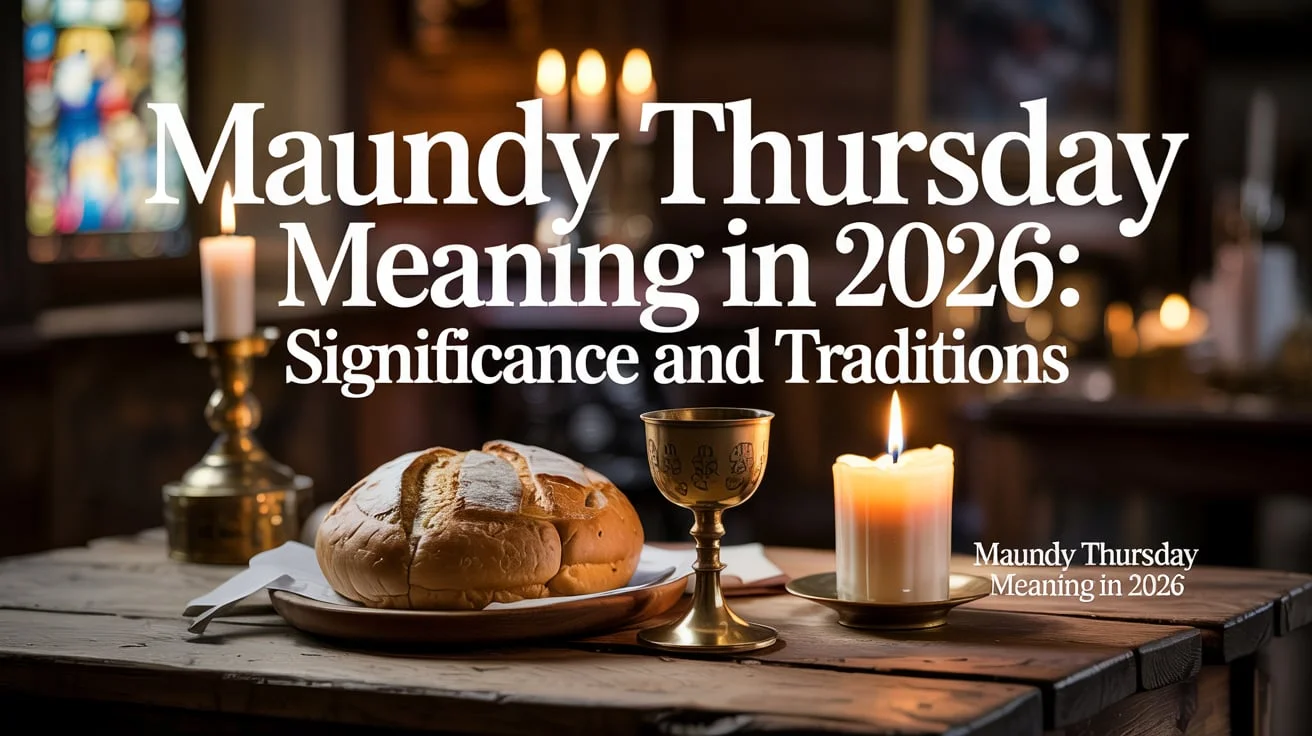
Maundy Thursday is one of the most important days in the Christian Holy Week. In 2025, it falls on April 17, marking the day Jesus shared His Last Supper with His disciples and delivered the commandment to love one another. For Christians worldwide, this day is a call to humility, reflection, and service.
Understanding the Maundy Thursday meaning in 2026 goes beyond knowing the date. It involves exploring its biblical roots, historical traditions, symbolic rituals, and how it continues to influence believers today. This article dives deep into all aspects of Maundy Thursday, offering insights, examples, and practical guidance for meaningful observance.
What is Maundy Thursday?
Maundy Thursday, also called Holy Thursday, commemorates the events of the evening before Jesus’ crucifixion. The word “Maundy” comes from the Latin term mandatum, meaning “commandment.” This refers to Jesus’ directive at the Last Supper: “Love one another as I have loved you” (John 13:34).
Unlike Good Friday, which focuses on the crucifixion, Maundy Thursday celebrates service, humility, and fellowship. It’s the day when Christians remember Jesus’ washing of the disciples’ feet—a powerful act of love and humility—and the institution of the Holy Communion.
Historical Background of Maundy Thursday
Maundy Thursday has roots in the early Christian church, dating back to the first centuries AD. Its observance developed around two central events:
- The Last Supper: Jesus shared bread and wine with His disciples, symbolizing His body and blood. This moment established the sacrament of the Eucharist.
- Washing of the Feet: Demonstrating humility and service, Jesus washed His disciples’ feet, instructing them to follow His example.
Throughout history, churches adapted Maundy Thursday rituals. Catholic, Orthodox, and Protestant denominations each emphasize different elements, from foot-washing ceremonies to the stripping of altars. These practices reflect both the solemnity and the transformative message of the day.
Biblical Significance
Maundy Thursday holds immense biblical importance. Several passages highlight its core teachings:
- John 13:1–17: Jesus washes the disciples’ feet, symbolizing humility and service.
- Luke 22:19–20: Jesus institutes the Eucharist, telling His disciples to eat the bread and drink the wine in remembrance of Him.
- John 13:34–35: The new commandment emphasizes love for others as the defining trait of discipleship.
These passages are more than historical accounts—they serve as moral and spiritual guidance. Foot-washing represents servant leadership, while Communion reminds believers of Christ’s sacrifice and the importance of spiritual unity.
Maundy Thursday Traditions Around the World
Maundy Thursday is observed differently across denominations and cultures. Here’s a breakdown of notable traditions:
Church Services and Liturgies
- Catholic Churches: Hold the Mass of the Lord’s Supper, featuring the washing of feet and Holy Communion.
- Protestant Churches: Often emphasize foot-washing ceremonies and reflective services.
- Orthodox Churches: Highlight the mystical aspects of the Eucharist and may include dramatic retellings of the Last Supper.
Global Cultural Practices
| Country | Tradition | Description |
| United Kingdom | Royal Maundy | Monarch distributes symbolic coins to the elderly, representing charity and humility. |
| Spain | Semana Santa | Elaborate processions reenact the Last Supper and Passion of Christ. |
| Philippines | Visita Iglesia | Devotees visit multiple churches, often including foot-washing rituals. |
| Italy | Holy Thursday Mass | Includes “Mandatum” ceremony, washing of the feet, and stripping of altars. |
These traditions show how Maundy Thursday combines spiritual devotion and cultural expression, making it both sacred and socially significant.
Symbolism of Maundy Thursday
Maundy Thursday is rich in symbolic acts. Understanding these symbols helps believers connect with its spiritual depth:
- Foot Washing: Represents humility, service, and selflessness.
- Bread and Wine: The Eucharist symbolizes Christ’s sacrifice and spiritual nourishment.
- Stripping of the Altar: Signifies mourning, reflection, and the coming sorrow of Good Friday.
- Candles and Processions: Highlight the presence of light amidst darkness, representing hope and guidance.
Each ritual carries a layered meaning, reinforcing Maundy Thursday’s central message: love in action.
Maundy Thursday in 2026: Date and Observance
In 2025, Maundy Thursday falls on April 17, two days before Good Friday and one week before Easter Sunday. The date is calculated based on the Gregorian calendar and the timing of Easter, which commemorates the resurrection of Jesus.
Tips for Observing Maundy Thursday in 2026
- Attend local church services, either Catholic, Protestant, or Orthodox.
- Participate in or observe the foot-washing ritual as a symbolic act of service.
- Reflect on personal acts of humility, forgiveness, and compassion.
- Share meals with family or community in remembrance of the Last Supper.
By combining traditional rituals with modern reflection, you can experience Maundy Thursday meaning fully and personally.
Modern Reflections and Relevance
Maundy Thursday isn’t just historical—it’s highly relevant today. Its core messages of humility, service, and love resonate in personal, social, and community contexts.
- Service and Volunteering: Foot-washing inspires acts of service, from volunteering to helping those in need.
- Forgiveness and Relationships: Reflect on conflicts and strive to reconcile, mirroring Jesus’ teachings.
- Spiritual Practice: Incorporate quiet reflection, prayer, or meditation into daily life.
For modern Christians, Maundy Thursday provides an opportunity to live out faith through action, not just ceremony.
Common Questions About Maundy Thursday
Why is it called Maundy Thursday?
The term comes from the Latin mandatum, referring to Jesus’ commandment to love one another.
Is Maundy Thursday a public holiday in 2026?
In many countries like Spain, Italy, and the Philippines, it is observed as a public or semi-public holiday. In the United States, it is not a federal holiday, but many churches hold special services.
How do different denominations observe it?
- Catholics focus on Mass, Holy Communion, and foot-washing.
- Protestants often emphasize reflective services and symbolic foot-washing.
- Orthodox Christians highlight liturgical elements and mysticism surrounding the Eucharist.
Difference between Maundy Thursday and Good Friday?
Maundy Thursday celebrates the Last Supper and acts of service, while Good Friday commemorates the crucifixion and sacrifice of Jesus.
Read More: BFE Meaning (2026): What It Really Stands For & How to Use It in Texts
Practical Table: Maundy Thursday Observances Worldwide
| Country | Observance | Unique Feature |
| UK | Royal Maundy | Coins distributed to elderly, symbolizing humility |
| Spain | Semana Santa | Elaborate processions depicting the Passion of Christ |
| Philippines | Visita Iglesia | Pilgrimage to multiple churches with foot-washing rituals |
| Italy | Holy Thursday Mass | “Mandatum” foot-washing ceremony, altar stripping |
| USA | Church Services | Reflective services with Communion, sometimes foot-washing |
This table shows both religious and cultural dimensions, highlighting the diversity of observance.
Conclusion:
Maundy Thursday in 2026 is more than a date on the calendar—it is a call to reflection, humility, and love. From the washing of feet to the sharing of bread and wine, the rituals convey timeless lessons: serve others, practice forgiveness, and live with compassion.
By understanding the Maundy Thursday meaning in 2026, participating in services, and reflecting on its teachings, believers can connect deeply with the spirit of Holy Week. Whether through global traditions, personal rituals, or acts of service, Maundy Thursday continues to inspire and guide millions of Christians around the world.

Daniel believes in the power of simplicity. At Captioniy.com, he writes short and clear Instagram captions that are easy to share and always impactful.