
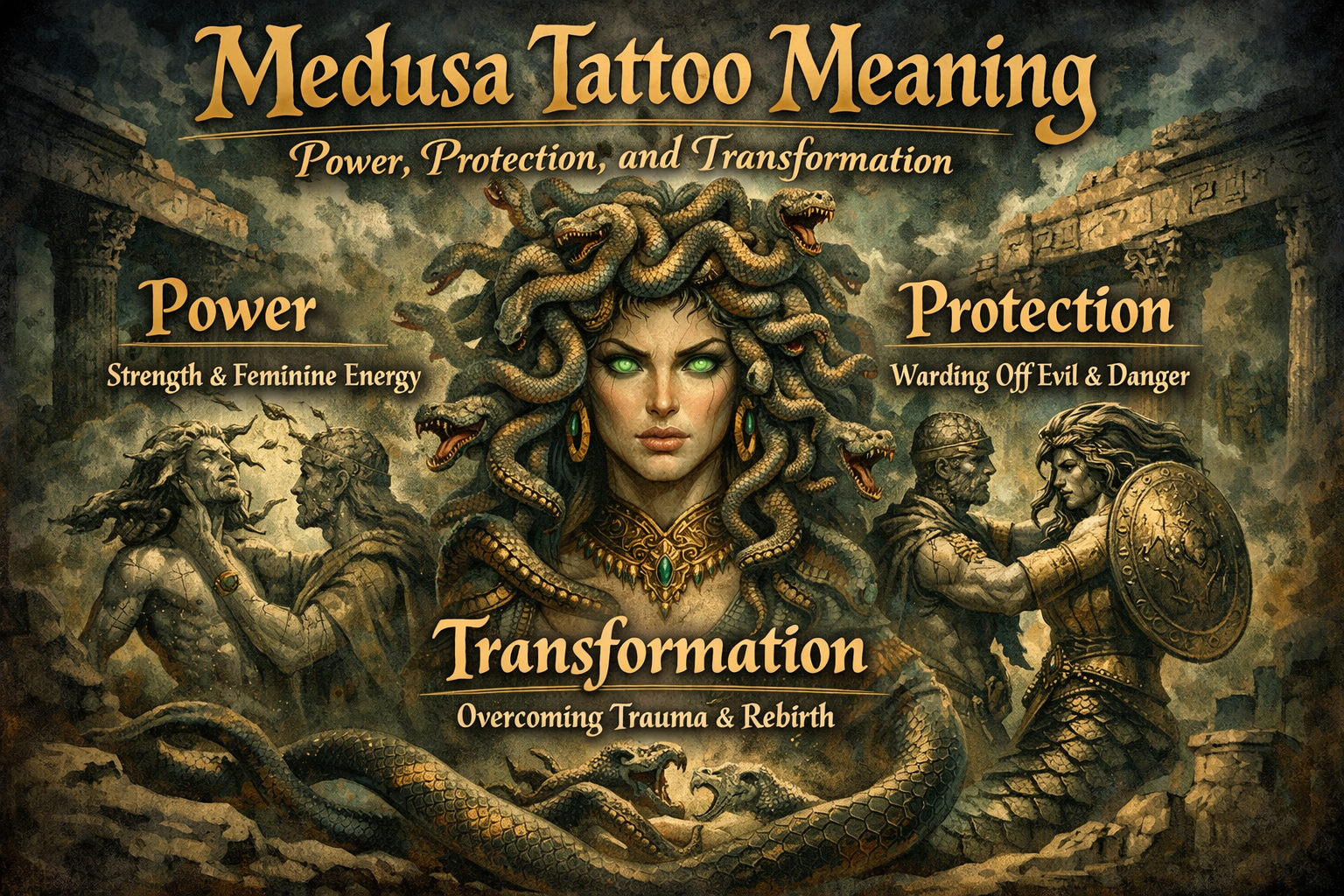
Medusa is one of the most recognizable figures from ancient mythology. Her face—framed with writhing snakes instead of hair—has fascinated people for centuries. Today, many people wear her image as body art, which makes the Medusa Tattoo Meaning a popular topic among tattoo enthusiasts, artists, and mythology fans.
Originally from Greek mythology, Medusa was known as a Gorgon whose gaze could turn people to stone. However, her story has evolved dramatically over time. In modern culture, especially in the United States, Medusa is often viewed less as a monster and more as a symbol of protection, strength, and survival.
Because of this shift, Medusa tattoos have become deeply meaningful for many people. Some see them as a protective symbol. Others connect them to themes of resilience, transformation, or feminine power. Understanding these layers requires looking at mythology, culture, and modern interpretation.
Quick Answer
The Medusa Tattoo Meaning often symbolizes protection, strength after trauma, and personal transformation. In the United States, many people view Medusa tattoos as a symbol of resilience and empowerment, while historically they also represented protection and warning in ancient Greek culture.
TL;DR
• Medusa tattoos symbolize protection, resilience, and transformation.
• The symbol comes from ancient Greek mythology.
• Modern interpretations often emphasize empowerment and survival.
• In the U.S., Medusa tattoos are popular in feminist and artistic communities.
• The symbol has shifted from “monster” to complex cultural icon.
Overview of Medusa Tattoo Symbolism
Before exploring history or culture, it helps to understand what a Medusa tattoo usually looks like and the basic meanings people associate with it.
In tattoos, Medusa is typically shown as a beautiful woman with snakes for hair. Some designs resemble ancient Greek statues. Others show a fierce, intense expression. Because tattoo artists interpret the figure in many ways, the symbolism can vary slightly depending on the design.
Common Visual Elements
Medusa tattoos often include recognizable visual features:
• Snake hair representing danger, transformation, and rebirth
• Intense gaze symbolizing power or protection
• Stone imagery referencing the myth of turning people to stone
• Classical Greek sculpture style for historical influence
• Dark or dramatic shading for mythological atmosphere
These elements help communicate deeper meanings tied to myth, culture, and personal identity.
Core Symbolic Meanings
Today, Medusa tattoos are commonly associated with several core ideas:
• Protection against harm or evil
• Female strength and independence
• Survival after trauma or hardship
• Transformation from victim to powerful figure
• Warning against betrayal or injustice
Because of these themes, Medusa tattoos resonate strongly with people who value resilience and personal power.
The Mythological Origins of Medusa
Understanding Medusa tattoos begins with her original myth. Her story comes from ancient Greek mythology and has been retold for thousands of years.
The Gorgon Sisters
Medusa was one of three Gorgon sisters:
• Stheno
• Euryale
• Medusa
Unlike her immortal sisters, Medusa was mortal. This detail became important later in her mythological story.
Medusa’s Transformation
In early Greek myths, Medusa was not always a monster. Some versions say she was once a beautiful woman who served in Athena’s temple.
According to later retellings, the sea god Poseidon assaulted Medusa in the temple. Athena then punished Medusa by transforming her hair into snakes and giving her the power to turn people to stone with a single glance.
However, scholars note that ancient sources vary. Some early myths simply describe Medusa as a monstrous creature from the beginning.
Perseus and the Beheading
The hero Perseus eventually killed Medusa using a clever strategy. He avoided her gaze by looking at her reflection in a polished shield.
After cutting off her head, Perseus used it as a weapon against enemies. Even after death, Medusa’s head still had the power to turn people to stone.
Interestingly, the head later became a protective symbol.
The Protective Meaning of Medusa in Ancient Greece
In ancient Greece, Medusa’s image wasn’t always seen as evil. Instead, her terrifying face often served a protective purpose.
The image of Medusa’s head was called the Gorgoneion, and it appeared on many objects.
Where the Gorgoneion Appeared
Ancient Greeks used Medusa imagery in several places:
• Shields carried by warriors
• Temple decorations
• Protective amulets
• Armor and clothing
• Architectural carvings
The frightening face was believed to scare away evil spirits and enemies.
Symbolic Protection
Because of this belief, Medusa became a symbol of apotropaic protection. That means an image designed to ward off harm.
This protective role directly influences modern tattoo meanings.
Medusa Tattoo Meaning in the United States
In the United States, Medusa tattoos have developed new meanings shaped by modern culture, art, and social movements.
Today, the image often represents strength and survival rather than fear.
Popular Interpretations
Many Americans choose Medusa tattoos for personal symbolism:
• A reminder of surviving trauma
• A symbol of feminine empowerment
• Personal protection or emotional armor
• Reclaiming misunderstood identities
• Artistic appreciation of mythology
Because of these meanings, Medusa tattoos have grown especially popular among women and survivors of hardship.
Cultural Influence
Modern media also helped reshape Medusa’s image. Films, books, and art often portray her as a tragic or misunderstood figure rather than a monster.
This shift encourages deeper empathy and symbolic reinterpretation.
Feminine Power and Medusa Symbolism
One of the strongest modern interpretations of Medusa connects to themes of feminine power and resistance.
For many people, Medusa represents the transformation of pain into strength.
Why Medusa Became a Feminist Symbol
Several elements of the myth inspire this interpretation:
• A woman punished after being wronged
• Transformation into a powerful figure
• Ability to defend herself from harm
• Reclaiming power through fearlessness
As a result, Medusa tattoos often symbolize reclaiming personal strength.
Empowerment Through Myth
Modern art frequently portrays Medusa not as a monster but as a protector. In tattoos, this reinterpretation reflects empowerment and identity.
Emotional and Psychological Meanings
Symbols often carry emotional significance beyond historical origins. Medusa tattoos are no exception.
For many people, the design reflects deeply personal experiences.
Psychological Associations
Medusa imagery may evoke several emotional themes:
• Strength during difficult experiences
• Defiance against injustice
• Protection from harmful relationships
• Courage to face fears
• Transformation after hardship
Because of these emotional connections, Medusa tattoos often carry powerful personal meaning.
Common Medusa Tattoo Styles and Designs
Tattoo artists create Medusa designs in many styles. Each style can slightly change the symbolism or mood.
Popular Tattoo Styles
Some of the most common Medusa tattoo designs include:
• Realistic portrait style
• Classical Greek statue design
• Dark gothic Medusa imagery
• Minimalist line art
• Neo-traditional tattoo style
Design Elements
Artists also add unique elements:
• Roses symbolizing beauty and danger
• Broken statues representing transformation
• Mirrors referencing Perseus’ strategy
• Snakes wrapping around the face
These details personalize the tattoo’s meaning.
Read More: Bomboclat Meaning: Origins, Usage, and Cultural Significance
Medusa Tattoo Meaning by Context
The symbolism of Medusa tattoos can change depending on where or how the image is used.
| Context | Meaning in the USA | Common Associations | Notes |
| Tattoo art | Strength and survival | Empowerment, resilience | Popular modern interpretation |
| Mythology | Monster with deadly gaze | Greek legends | Original ancient context |
| Ancient Greek protection | Ward against evil | Shields and temples | Known as Gorgoneion |
| Feminist symbolism | Reclaiming power | Justice and survival | Modern cultural shift |
| Artistic design | Beauty mixed with danger | Fashion and aesthetics | Common in modern tattoo culture |
Cross-Cultural Interpretations
Although Medusa comes from Greek mythology, her symbolism resonates globally.
Different cultures sometimes interpret her story in unique ways.
Global Symbolic Themes
Across cultures, Medusa may represent:
• The power of transformation
• Fear used as protection
• Beauty mixed with danger
• Mythological feminine power
Because mythology travels through art and storytelling, these meanings continue to evolve.
Misunderstandings and Controversies
Like many mythological symbols, Medusa’s meaning is sometimes misunderstood.
Some people still see her only as a monster. Others interpret the myth differently.
Different Interpretations
The debate often focuses on how her story should be understood:
• Monster from the beginning
• Victim turned powerful figure
• Symbol of fear and danger
• Representation of justice or revenge
These interpretations show how mythology can change across generations.
Respectful Perspective
Today, many artists and historians emphasize that myths evolve. Each generation reinterprets them based on cultural values.
How Medusa’s Meaning Changed Over Time
Medusa’s symbolism has transformed dramatically throughout history.
Timeline of Meaning Shifts
Ancient Greece: protective monster symbol
Middle Ages: symbol of danger and evil
Renaissance art: tragic mythological figure
Modern culture: empowerment and survival
Because of these shifts, Medusa tattoos today carry far more complex meaning than the original myth alone.
Why Medusa Tattoos Are Popular Today
In the 2020s, Medusa tattoos have surged in popularity across the United States.
Several factors explain this trend.
Reasons for Popularity
• Interest in mythology-inspired tattoos
• Social media sharing of symbolic tattoos
• Growing conversations about empowerment
• Artistic appeal of snake imagery
• Unique mix of beauty and danger
As a result, Medusa tattoos often spark conversations about symbolism and personal meaning.
FAQs
What does a Medusa tattoo symbolize?
A Medusa tattoo usually symbolizes protection, strength, and transformation. In modern American culture, it often represents survival and empowerment after difficult experiences.
Is a Medusa tattoo a feminist symbol?
For many people, yes. Some interpret Medusa as a symbol of reclaiming power and resisting injustice, especially in modern cultural discussions.
Are Medusa tattoos meant to be protective?
Historically, Medusa’s head was used as a protective symbol in ancient Greece. Today, some tattoo wearers still connect the design with protection.
Is Medusa evil in mythology?
In early myths, Medusa was described as a dangerous monster. However, later interpretations portray her as a tragic or misunderstood figure.
Why do survivors sometimes choose Medusa tattoos?
Some survivors identify with Medusa’s transformation from victim to powerful figure. The tattoo can symbolize resilience and reclaiming personal strength.
What does Medusa turning people to stone represent?
Symbolically, the stone gaze may represent the power of fear, boundaries, or protection against threats.
Conclusion
Medusa’s story has traveled through thousands of years of myth, art, and interpretation. Once feared as a terrifying monster, she has gradually become a symbol of transformation and power.
Today, the Medusa Tattoo Meaning reflects this long evolution. In modern American culture, the design often symbolizes resilience, protection, and reclaiming strength after hardship.
Because mythology continues to evolve, Medusa remains one of the most fascinating symbols in tattoo art. Her image reminds us that stories—and their meanings—can change over time, reflecting the values and struggles of each generation.

Sophia adds humor and confidence to Captioniy.com. Her witty Instagram captions and bold quotes help readers make their posts stand out.