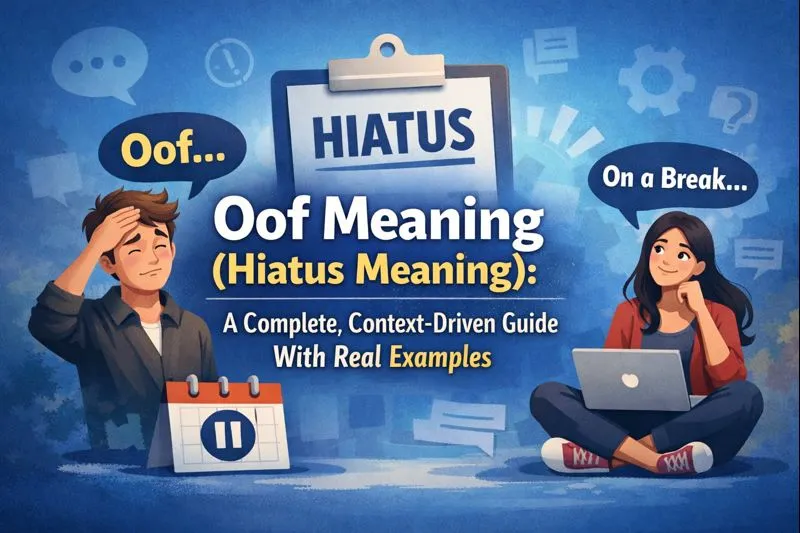
Language doesn’t stand still. It bends, adapts, and reshapes itself every time people talk online. That’s why words like “oof” and “hiatus” feel confusing at first. One sounds casual and emotional. The other sounds formal and deliberate. Yet both appear in the same digital spaces—comments, captions, announcements, and replies.
If you’ve ever paused mid-scroll wondering what does oof really mean here or is hiatus the right word to use, this guide is for you.
You’ll find clear definitions, real examples, practical alternatives, and context-based explanations that reflect how people actually communicate today.
What Does Oof Mean? (Clear, Human Explanation)
Oof is an emotional reaction word.
People use it when a situation hits hard and explaining feels unnecessary.
In simple terms, oof meaning refers to a short exclamation that expresses sympathy, discomfort, awkwardness, secondhand pain, or mild shock.
It works because it’s vague in the right way. The emotion is clear even when the details aren’t.
The Emotional Range of “Oof”
“Oof” isn’t one-note. Its meaning shifts depending on context, tone, and delivery.
Common emotional uses include:
- Empathy: reacting to someone else’s bad experience
- Embarrassment: acknowledging an awkward moment
- Secondhand pain: reacting to a mistake or failure
- Resigned acceptance: when something goes wrong, again
The word doesn’t explain. It reacts.
That’s why it spreads so easily in online spaces.
Where Did “Oof” Come From? (Relevant Background)
“Oof” didn’t start on social media. People have used similar sounds for centuries to express discomfort or exertion.
What changed was where and how it spread.
Key Moments in Oof’s Rise
- Spoken English: used informally to express physical or emotional impact
- Gaming culture: popularized through reaction moments and character sounds
- Internet memes: transformed into a universal reaction word
Gaming platforms and meme culture pushed “oof” into daily language. Once people realized a single word could replace a full sentence, it stuck.
How “Oof” Is Used in Real Life
Understanding oof meaning requires seeing it in action. Context always matters.
Oof in Casual Conversation
In everyday speech, “oof” often replaces a longer empathetic response.
Examples:
- “I failed my exam.”
Oof. That hurts. - “I sent the email to the wrong client.”
Oof, that’s awkward.
It shows acknowledgment without overexplaining.
Oof in Text Messages and DMs
Texting rewards speed and emotional clarity. “Oof” fits perfectly.
- “My car broke down again.”
Oof 😬 - “They canceled the concert last minute.”
Big oof.
Short. Relatable. Human.
Oof on Social Media
Social platforms thrive on reactions.
People use “oof” in:
- Comment sections
- Quote tweets
- Meme captions
It signals shared understanding. Everyone gets the emotion without context overload.
Oof in Gaming and Online Communities
Gaming culture helped lock in “oof” as a reaction word.
Common uses include:
- Reacting to failed plays
- Acknowledging near wins
- Responding to unlucky events
In these spaces, “oof” often replaces criticism. It softens the moment.
What Does Hiatus Mean? (Accurate and Practical Definition)
Now let’s shift tone.
Hiatus is not emotional. It’s informational.
Hiatus meaning:
A planned or unplanned break in activity, usually temporary, often without a fixed return date.
The word carries weight. It signals intention and structure.
Key Characteristics of a Hiatus
- Suggests a pause, not an ending
- Often used in professional or public contexts
- Implies future return, though timing may be unclear
Unlike “oof,” hiatus communicates status, not emotion.
Hiatus vs Break vs Pause (What Actually Changes)
These words look interchangeable. They’re not.
| Term | Meaning | Tone | Best Use |
| Hiatus | Extended or undefined break | Formal | Creators, shows, work |
| Break | Temporary stop | Neutral | Personal updates |
| Pause | Very short stop | Casual | Conversations, tasks |
Choosing the wrong word shifts how people interpret your message.
Why People Confuse Oof Meaning With Hiatus Meaning
The confusion comes from digital context collapse.
Online, emotional reactions and informational updates share the same space.
People might comment “oof” on a hiatus announcement, which blurs meaning.
Example of Confusion
- “The podcast is going on hiatus.”
Comment: Oof.
Here, “oof” doesn’t mean a break. It signals empathy for disappointment.
Using “Oof” Correctly
“Oof” works best when emotion matters more than explanation.
When Oof Works Well
- Reacting to bad news
- Acknowledging awkward mistakes
- Showing empathy quickly
When Oof Feels Wrong
- Professional emails
- Serious health updates
- Formal announcements
In those moments, clarity beats casual tone.
Using “Hiatus” Correctly
Hiatus communicates responsibility and intention.
Best Situations for Hiatus
- Content creators pausing output
- TV shows between seasons
- Businesses suspending operations
Tips for Using Hiatus Clearly
- Explain why the hiatus exists
- Set expectations about duration
- Reassure audiences about return
Vagueness creates uncertainty. Clarity builds trust.
Read More”Abracadabra Meaning, Origins, and Modern Alternatives for Every Tone
Better Alternatives to “Oof” (By Context)
Sometimes “oof” isn’t enough. Or it feels too casual.
Empathy-Based Alternatives
- “That’s rough.”
- “I’m sorry you’re dealing with that.”
Lighthearted Alternatives
- “Yikes.”
- “Well… that escalated.”
Professional Alternatives
- “Understood.”
- “That’s unfortunate.”
Each option keeps the emotion while matching the setting.
Better Alternatives to “Hiatus” (By Situation)
“Hiatus” can sound heavy. Sometimes that’s unnecessary.
Casual Alternatives
- “Taking a short break”
- “Stepping away for a bit”
Professional Alternatives
- “Temporarily suspending activity”
- “Scheduled pause in operations”
The goal stays the same. Only the tone shifts.
Real Examples: Oof and Hiatus Used Correctly
Text Message Example
“I forgot the meeting was today.”
Oof. Been there.
Social Media Example
“We’re going on hiatus to regroup and plan what’s next.”
Comment: Oof, take the time you need.
Workplace-Safe Example
“The project is on a temporary pause while we reassess priorities.”
No slang. Clear intent.
Common Mistakes People Make
Mistakes usually come from tone mismatch.
Frequent Errors
- Overusing “oof” until it loses meaning
- Announcing a hiatus without explanation
- Mixing slang into serious updates
Words shape perception. Small choices carry big impact.
Quick Decision Guide
Ask yourself these questions:
- Is this emotional or informational?
- Who is my audience?
- Does tone matter more than speed?
If emotion leads, oof might fit.
If clarity leads, hiatus works better.
Why Context Always Beats Definitions
Definitions help. Context decides.
The same word means different things depending on:
- Platform
- Audience
- Situation
Good communicators don’t memorize definitions. They read the room.
FAQs About Oof Meaning and Hiatus Meaning
Is “oof” rude?
No. It’s informal, not disrespectful, when used appropriately.
Can a hiatus be permanent?
Technically no. If there’s no return planned, another term fits better.
Is “oof” acceptable at work?
Only in casual internal chats, never formal communication.
What’s the closest formal alternative to “oof”?
“That’s unfortunate” or “I understand.”
Conclusion
Language isn’t about sounding smart.
It’s about being understood.
Oof meaning centers on emotion.
Hiatus meaning centers on intention.
When you match the word to the moment, communication flows. When you don’t, confusion follows.
Choose thoughtfully. Speak clearly. Let context lead.

Sophia adds humor and confidence to Captioniy.com. Her witty Instagram captions and bold quotes help readers make their posts stand out.