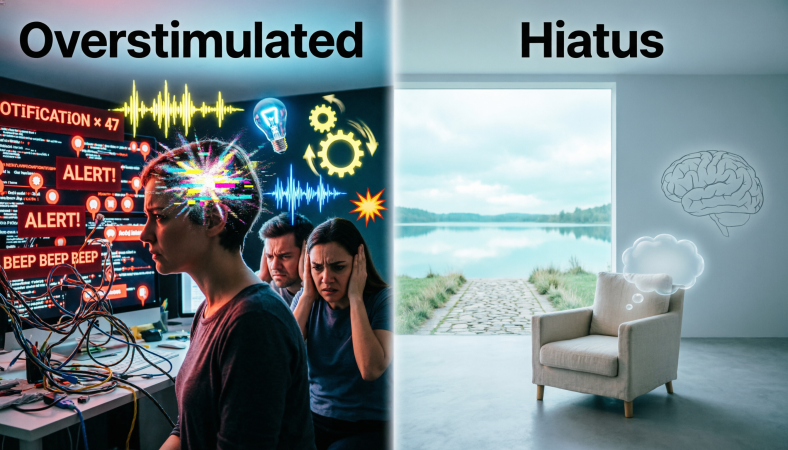
You hear it all the time. Someone says they feel overstimulated. A favorite creator announces they’re going on hiatus. The words sound familiar, yet when you pause and think about their exact meanings, things blur. Are they emotional states? Are they decisions? Are they dramatic exaggerations? If you’ve ever wondered what these terms actually mean and how to use them correctly, you’re not alone.
The truth is simple. The overstimulated meaning describes an internal experience. It points to sensory or emotional overload. The hiatus meaning, on the other hand, describes an intentional pause. One reflects how you feel. The other reflects what you choose to do. Mix them up and communication gets messy fast. Clarity changes everything.
In this guide, you’ll learn the clear definitions, real-life examples, and practical differences between overstimulated and hiatus. You’ll also discover how to use both words confidently in conversations, at work, and online. By the end, you won’t just understand these terms. You’ll know exactly when and how to use them.
Overstimulated Meaning: What It Really Means and Why It Happens
What Does Overstimulated Mean?
The overstimulated meaning is straightforward:
Overstimulated describes a state where your senses, emotions, or thoughts receive more input than your brain can comfortably process.
In plain terms, your system feels overloaded.
This overload can come from:
- Loud noise
- Bright lights
- Crowded spaces
- Constant notifications
- Emotional conflict
- Too many tasks at once
Think of your brain like a browser. Open too many tabs and it slows down. Add music and video streaming and it freezes. That’s overstimulation in action.
One-Sentence Summary
Overstimulated means mentally or physically overwhelmed by excessive input.
The Psychology Behind Overstimulation
Your nervous system runs on balance. When sensory or emotional input exceeds your capacity, your body reacts fast.
Here’s what happens biologically:
- Your brain activates the fight-or-flight response
- Stress hormones like cortisol increase
- Heart rate rises
- Muscles tense
- Focus decreases
You might snap at someone. You might shut down. Or you might feel anxious without knowing why.
Overstimulation often overlaps with stress. However, they are not identical.
Overstimulation vs Stress
| Factor | Overstimulation | Stress |
| Trigger | Sensory or emotional overload | Pressure, deadlines, fear |
| Duration | Often short-term | Can be long-term |
| Body reaction | Irritability, agitation | Anxiety, fatigue |
| Relief | Quiet, reduced input | Problem resolution |
Modern life fuels overstimulation. Smartphones deliver alerts every few minutes. Open offices amplify noise. Social media feeds never stop scrolling.
Your brain wasn’t built for nonstop input. That mismatch creates overload.
Signs You’re Overstimulated
Overstimulation doesn’t look the same for everyone. Still, common patterns show up again and again.
Emotional Signs
- Irritability
- Sudden anger
- Anxiety spikes
- Feeling “on edge”
- Emotional shutdown
Physical Signs
- Headaches
- Jaw clenching
- Rapid breathing
- Muscle tension
- Fatigue
Behavioral Signs
- Snapping at loved ones
- Avoiding conversation
- Crying unexpectedly
- Needing silence
- Walking away mid-discussion
Here’s a practical breakdown:
| Symptom | What It Feels Like | What Helps |
| Noise sensitivity | Every sound feels sharp | Step outside |
| Irritability | Small things feel huge | Deep breathing |
| Brain fog | Hard to think clearly | Short break |
| Restlessness | Can’t sit still | Light movement |
| Emotional flooding | Tears or anger rise fast | Quiet time |
When you understand the overstimulated meaning, you stop blaming yourself. You start adjusting your environment.
Overstimulated in Adults vs Children
Children often show overstimulation through meltdowns. Adults show it through tension and withdrawal.
In Children
- Covering ears
- Crying suddenly
- Refusing interaction
- Hyperactivity
Children lack the language to explain overload. Their behavior speaks instead.
In Adults
- Saying “I need space”
- Avoiding eye contact
- Overreacting to minor issues
- Feeling exhausted after social events
Many adults dismiss these signals. They push through. That usually makes it worse.
Overstimulated in Relationships
Arguments often start from overstimulation rather than disagreement.
Imagine this scenario:
You come home after a loud day at work. Traffic was chaotic. Your phone buzzed nonstop. Your partner immediately starts discussing bills.
You snap.
It’s not about the bills. It’s overload.
How to Communicate It Clearly
Instead of saying:
- “Stop talking.”
Try:
- “I’m overstimulated right now. Can we talk in 20 minutes?”
That small shift changes everything.
What Not to Say
- “You’re overreacting.”
- “It’s not a big deal.”
Overstimulation feels intense because your nervous system is activated. Dismissing it adds emotional friction.
Overstimulated in Social Media Culture
On platforms like TikTok, “overstimulated” often appears in casual captions. Sometimes the term gets exaggerated.
However, real overstimulation is not trendy language. It’s a genuine nervous system response.
Use the term accurately. Reserve it for real sensory or emotional overload. Not just mild annoyance.
How to Calm Down When You’re Overstimulated
You don’t need complicated rituals. Simple resets work best.
Immediate Reset Strategies
- Lower the lights
- Silence notifications
- Step outside for five minutes
- Take slow breaths
- Drink water
Long-Term Prevention
- Set screen limits
- Schedule quiet time
- Reduce multitasking
- Declutter workspaces
Small changes create big relief.
Synonyms and Related Words
Words often confused with overstimulated:
- Overwhelmed
- Burned out
- Flooded
- Agitated
- Sensory overloaded
They overlap but don’t always match.
Burnout develops over time. Overstimulation can happen within minutes.
Hiatus Meaning: Clear Definition and Correct Usage
What Does Hiatus Mean?
The hiatus meaning is simple:
A hiatus is a temporary pause or break in activity.
The word comes from Latin, meaning “gap” or “opening.”
Unlike overstimulation, hiatus describes an intentional action, not a mental state.
One-Sentence Summary
Hiatus means a deliberate temporary pause.
Hiatus Meaning in Work and Career
Professionals use hiatus to describe planned breaks.
Examples include:
- Parental leave
- Career sabbaticals
- Medical recovery
- Academic pauses
A hiatus does not mean quitting. It signals temporary withdrawal.
Sabbatical vs Hiatus
| Term | Meaning | Duration | Formality |
| Hiatus | Temporary pause | Flexible | General |
| Sabbatical | Planned leave for growth | Often months | Formal |
Many companies encourage sabbaticals to prevent burnout. Tech giants like Microsoft and Adobe have structured leave programs.
Read More: Chihiro Meaning and Hiatus Meaning Explained Clearly: Origins, Symbolism, and Real-World Usage
Hiatus Meaning in Relationships
When couples say they’re “on hiatus,” they mean they’re taking space without ending things.
That space can:
- Reduce conflict
- Allow reflection
- Clarify priorities
However, a hiatus must have boundaries. Without clear expectations, confusion grows.
Hiatus Meaning in Entertainment
TV shows often go on hiatus between seasons.
For example:
- Shows break mid-season during holidays
- Bands pause touring
- Content creators step away from posting
Fans often assume hiatus equals breakup. That isn’t always true.
A hiatus signals pause. Not termination.
How Long Is a Hiatus?
There’s no fixed rule.
A hiatus can last:
- A few weeks
- Several months
- Occasionally years
The key element is temporary intent.
If no return is planned, it’s not a hiatus. It’s an ending.
Hiatus vs Break vs Leave
These words seem similar. They aren’t identical.
| Word | Intentional | Formal Tone | Example |
| Hiatus | Yes | Neutral | “I’m on hiatus.” |
| Break | Yes | Casual | “I need a break.” |
| Leave | Yes | Formal | “I’m on medical leave.” |
Choose the word that fits context.
How to Announce a Hiatus Professionally
Clarity builds trust.
What to Include
- Reason if comfortable sharing
- Expected duration
- Contact method during absence
Example Structure
“Starting June 1, I’ll be on hiatus for eight weeks to focus on family priorities. I’ll respond to urgent matters by email.”
Keep it direct. Avoid dramatic language.
Overstimulated Meaning vs Hiatus Meaning: The Core Difference
Here’s the simplest distinction:
- Overstimulated = Internal overload
- Hiatus = External pause
One describes how you feel. The other describes what you do.
Sometimes overstimulation leads to a hiatus. For example, a content creator may step back after months of intense posting.
However, not every hiatus stems from overwhelm. Some breaks are strategic.
When Overstimulation Leads to a Hiatus
Burnout often follows chronic overstimulation.
Case Study:
A freelance designer handled 10 clients at once. Notifications never stopped. After months of overload, migraines increased. She announced a six-week hiatus.
Result:
- Reduced stress
- Clearer priorities
- Improved creativity
Her hiatus wasn’t failure. It was regulation.
How to Express Well-Wishes Properly
When someone says they feel overstimulated, respond with empathy.
Supportive Phrases
- “Take the time you need.”
- “Your well-being matters.”
- “Let me know how I can help.”
- “Rest first. We can talk later.”
When Someone Announces a Hiatus
- “Wishing you a refreshing break.”
- “We’ll be here when you return.”
- “Take care of yourself.”
Avoid pressuring language like:
- “Don’t disappear too long.”
- “We need you.”
Support without guilt.
Quick Reference Definitions
| Term | Definition |
| Overstimulated | Mentally overwhelmed by excessive sensory or emotional input |
| Hiatus | A temporary intentional pause in activity |
Common Mistakes to Avoid
- Using hiatus to describe a 10-minute break
- Calling normal stress overstimulation
- Assuming hiatus equals breakup
- Ignoring nervous system signals
Precision matters. Words shape perception.
FAQs
What does overstimulated mean emotionally?
It means your emotional input exceeds your processing capacity. You feel flooded or reactive.
Is overstimulation a disorder?
No. It’s a nervous system response. However, chronic overstimulation can worsen anxiety.
What does hiatus mean in a relationship?
It means taking intentional space without fully ending the relationship.
Is a hiatus permanent?
No. By definition, it’s temporary.
Conclusion
Understanding the overstimulated meaning and the hiatus meaning changes how you respond to yourself and others.
Overstimulation signals overload. It calls for reduction and reset. A hiatus signals intention. It reflects choice and space.
Use these words precisely. Speak them calmly. Respond with empathy.
When you do, communication becomes clearer. Relationships grow stronger. And breaks feel restorative instead of dramatic.
Words matter. Use them wisely.

Emily is a passionate writer at Captioniy.com who loves turning emotions into words. She creates heartfelt Instagram captions and short quotes that make every post special.