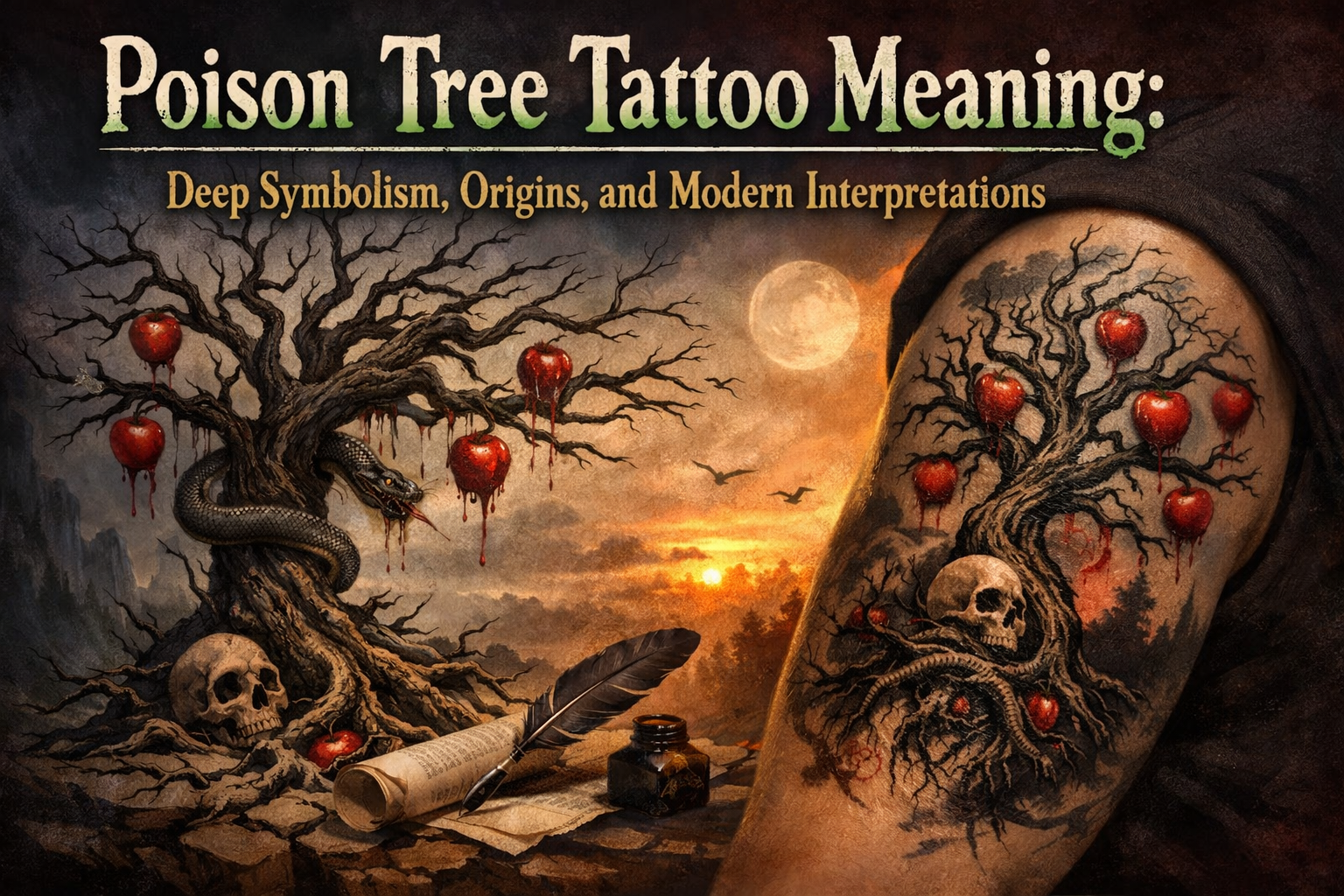
Tattoos aren’t just skin deep. They tell stories, hold emotions, and act as personal beacons of meaning. Among darker-themed tattoos, the Poison Tree tattoo meaning has grown in popularity because it captures something raw about human emotion — especially anger, betrayal, and what happens when we bury difficult feelings instead of facing them.
In this deep-dive guide, you’ll discover the real history, symbolic richness, emotional layers, artistic interpretations, and practical considerations behind Poison Tree tattoos. This isn’t fluff. This is the kind of content tattoo lovers, artists, and curious readers actually want to read.
Why Poison Tree Tattoo Meaning Resonates Today
Most people gravitate toward tattoos that feel true. Poignant. Honest. A Poison Tree tattoo does just that. It speaks to the darker corners of human experience — places where pain once lived, where resentment burned, and where silence became louder than words.
You might ask, Why tattoo a symbol tied to poison and toxicity? People choose this design not to glorify negativity, but to acknowledge pain, remind themselves of emotional growth, or symbolize a turning point in their life.
The Literary Origin: William Blake’s “A Poison Tree”
Before this symbol appeared on skin, it lived on the page.
William Blake wrote the poem “A Poison Tree” in 1794 as part of his Songs of Experience collection. The poem deals with emotional suppression, hidden anger, and the destructive path of unresolved feelings.
Here’s a short excerpt:
“I was angry with my friend:
I told my wrath, my wrath did end.
I was angry with my foe:
I told it not, my wrath did grow.”
This simple yet powerful stanza drives home the central idea: Unspoken anger grows roots, and it turns toxic.
Blake’s work isn’t just poetry. It provides a psychological mirror. The Poison Tree tattoo meaning borrows directly from this metaphor — emotional suppression breeds pain.
Core Symbolic Meanings of a Poison Tree Tattoo
Let’s break down what the Poison Tree tattoo really represents. Each interpretation isn’t random — it reflects emotions people carry long after their words have faded.
Suppressed Anger and Emotional Repression
People often bury hard emotions — especially anger — because society teaches us to “stay calm” or “keep smiling.” But when emotions stay buried, they don’t disappear. They transform.
A Poison Tree tattoo stands for:
- Emotions someone never expressed
- Energy that turned inward and became corrosive
- The unpleasant reality that unexpressed anger can hurt more than spoken words
Betrayal and Broken Trust
Some tattoo bearers choose this design after deep betrayal — from a friend, partner, or family member. The tree itself becomes a living memory of that pain.
In this sense, the Poison Tree symbolizes:
- Hurt that didn’t heal naturally
- The moment someone realized trust was broken
- A reminder of a boundary crossed
Inner Darkness and the Shadow Self
In psychology, the “shadow self” refers to the parts of ourselves we hide. These traits might feel uncomfortable — anger, jealousy, fear — but they’re still part of who we are.
People who embrace a Poison Tree tattoo might be saying:
“I recognize my darkness, but I’m not afraid of it.”
Consequences of Silence
Silence doesn’t always protect. It can let resentment grow until it becomes destructive. A Poison Tree tattoo often signals:
- A life lesson learned the hard way
- A warning: don’t ignore what you feel
- A push toward emotional honesty
Poison Tree Tattoo as a Moral Warning
Beyond personal meaning, this tattoo often serves as a cautionary symbol.
People don’t get Poison Tree tattoos to romanticize pain. They get them to acknowledge it. To grow.
Some common interpretations include:
- “Don’t let anger eat you alive.”
- “Unspoken feelings can do real damage.”
- “Growth comes from facing emotions, not hiding them.”
In that way, the tattoo becomes a moral compass — not judgmental, but reflective.
Common Poison Tree Tattoo Elements and Their Meanings
Here’s where design elements help tell a fuller story.
| Element | Symbolic Meaning |
| Poisoned Fruit | Temptation, revenge, hidden consequences |
| Roots | Deep-seated resentment or emotional depth |
| Dead Leaves | Emotional burnout, decay, loss |
| Serpents | Deceit, danger, corruption |
| Ravens/Crows | Mystery, inner darkness, transformation |
Breaking these down helps you understand why certain artists pair these elements together.
Poisoned Fruit
In Blake’s poem, the fruit represents:
- What grows from hidden emotion
- The outcome of unspoken conflict
In tattoos, the fruit can be:
- Bright and tempting
- Dark and ominous
This contrast highlights the tension between appearing okay vs feeling pain inside.
Roots
Roots aren’t just visual details. They symbolize:
- How far a pain has spread
- The depth of emotional history
- Wounds that took time to grow
Dead Leaves or Withered Branches
These additions show:
- Loss
- Emotional decay
- A period of life that’s passed
Animal Companions (Serpents, Ravens)
Animals in tattoos often intensify meaning.
- Serpents — temptation, danger, deceit
- Ravens — mystery, transformation, intelligence
When paired with a Poison Tree, these animals deepen the emotional narrative.
Color Symbolism in Poison Tree Tattoos
Color matters just as much as design. Tattoo artists use specific color palettes to evoke different emotional tones.
| Color | What It Suggests |
| Black & Grey | Seriousness, mourning, realism |
| Dark Green | Poison, jealous roots |
| Deep Red | Anger, blood, visceral emotion |
| Earth Tones | Psychological realism, grounded pain |
Black & Grey tattoos feel classic and introspective.
Dark Green hints at toxicity and hidden nature.
Red accents make the design emotionally sharp — like spilled feelings on skin.
Popular Poison Tree Tattoo Styles and What They Say About You
Style is more than aesthetics. It’s personality in ink.
Blackwork and Fine Line
- Understated, thoughtful, introspective
- Works for people who want meaning over flash
Realism
- Bold, striking, confrontational
- For those who want their story told clearly and vividly
Gothic or Dark Illustrative
- Embraces darkness with flair
- Often paired with dramatic shading, surreal scenes
Each style gives the same symbol a different emotional punch.
Placement Matters: Where People Tattoo the Poison Tree
Placement isn’t accidental. It reflects intention.
| Placement | Emotional Undertone |
| Forearm | Daily reminder, visible warning |
| Chest / Ribcage | Heart-centered meaning, deeply personal |
| Back / Spine | Wordless burden, internal narrative |
| Thigh | Hidden reflection, private message |
Forearm tattoos speak outward — like a message to the world.
Chest tattoos speak inward — like a promise to oneself.
Placement adds another layer to the Poison Tree tattoo meaning.
Read More: Loitering Meaning & Hiatus Meaning: Definitions, Usage, and Real-World Examples
Poison Tree Tattoo vs Tree of Life: A Symbolic Comparison
A common question: How does a Poison Tree tattoo differ from a Tree of Life tattoo?
Both involve trees, but their emotional roots diverge sharply.
| Symbol | Tree of Life | Poison Tree Tattoo |
| Growth | Healthy, balanced | From suppressed emotion |
| Emotion | Harmony, peace | Anger, betrayal, silence |
| Visual Tone | Lush, open | Dark, jagged, twisted |
| Life Lesson | Unity & connection | Consequences of buried emotions |
The Tree of Life usually celebrates growth and connection.
The Poison Tree confronts pain and consequence.
Neither is “good” or “bad.” They just speak to different emotional experiences
Psychological Reasons People Choose Poison Tree Tattoos
Why do people choose this symbol over a flower, animal, or quote?
Here are real, psychological motivations:
- Processing trauma: Tattoos as emotional therapy
- Reclaiming narrative: Turning pain into art
- Memorializing a lesson: A permanent reminder to never bottle feelings
- Articulating the unspoken: Visual language where words failed
Tattoos can be healing. They can be markers of growth. They can be emotional anchors.
Cultural and Modern Interpretations
Social media and tattoo culture have reshaped how we interpret symbols.
Today, the Poison Tree tattoo’s meaning isn’t just about anger. It’s about:
- Mental health awareness
- Understanding emotional complexity
- Owning pain rather than disguising it
Platforms like Instagram and Pinterest show thousands of variations — each personal, each unique.
Is a Poison Tree Tattoo Negative? Let’s Reframe It
It’s easy to see dark symbolism and assume negativity. But hold on.
This tattoo isn’t glorifying pain. It’s acknowledging:
- What once hurt you
- What you survived
- What you learned
In many cases, people use it as a positive reminder — not of bitterness, but of growth.
Pain can be a teacher.
Things to Consider Before Getting a Poison Tree Tattoo
Before you commit, think about these factors:
Emotional Readiness
Ask yourself:
- Does this symbol still feel true?
- Am I choosing it as a reminder or as a burden?
Artist Style and Expertise
Look for artists who:
- Work with fine line or dark illustrative styles
- Understand emotional symbolism
- Can translate meaning into design
Long-Term Relevance
Tattoos evolve with you. Be sure this meaning will still matter years from now.
Real Perspectives: Quotes from Wearers
Here are perspectives from people with Poison Tree tattoos:
“It reminds me that silence doesn’t always mean peace.”
— A.H., tattoo wearer
“I chose it not for anger… but for closure.”
— J.E., artist client
“This tattoo tells my story better than words ever could.”
— S.T., ink enthusiast
Each quote nails a different way people interpret the same symbol.
FAQ: Quick Answers to Common Questions
What does a Poison Tree tattoo symbolize?
It symbolizes suppressed emotions, especially anger or betrayal, and the personal growth that comes from facing them.
Is a Poison Tree tattoo tied to William Blake?
Yes. The design draws direct inspiration from Blake’s poem about emotional repression and its consequences.
Does a Poison Tree tattoo represent revenge?
Not necessarily. While betrayal is part of the meaning spectrum, most people view it as a lesson rather than a pursuit of revenge.
Can it have a positive meaning?
Absolutely. Many wear this tattoo as a reminder of emotional honesty and growth.
Is it a permanent negative symbol?
No. Meaning evolves with the wearer.
Final Thoughts: The True Poison Tree Tattoo Meaning
The Poison Tree tattoo isn’t just a dark aesthetic. It’s emotional archaeology — digging deep into what makes us human. It stands for:
- Emotional honesty
- Growth after hurt
- The courage to face pain
- A reminder that words, when unspoken, can cause damage
When you understand the depth, the design becomes more than ink on skin. It becomes a story you carry with intention.

Emily is a passionate writer at Captioniy.com who loves turning emotions into words. She creates heartfelt Instagram captions and short quotes that make every post special.