
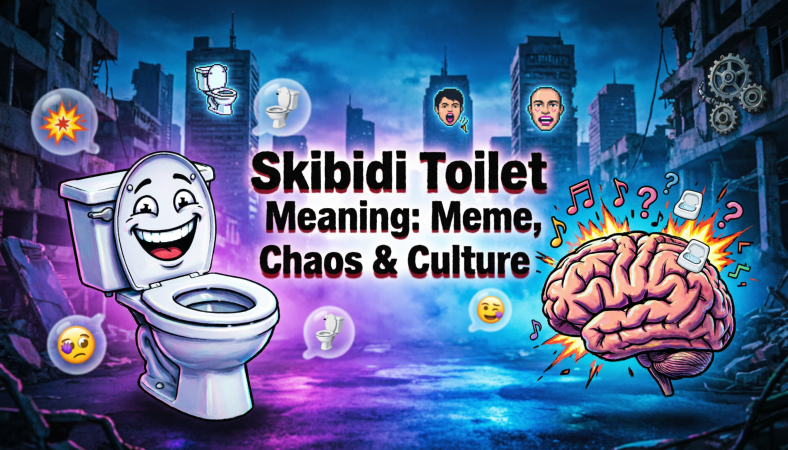
Skibidi Toilet Meaning might sound like nonsense at first. After all, it involves a singing head popping out of a toilet. Yet this strange image became one of the most talked-about internet trends in the United States in 2023 and 2024.
Today, many people wonder what it actually means. Is it just random humor? Or does it reflect something deeper about internet culture, chaos, and attention?
Although it began as a short animated video, Skibidi Toilet quickly turned into a symbol. It now represents a specific era of online creativity—loud, fast, absurd, and highly shareable.
Quick Answer
Skibidi Toilet Meaning in the United States symbolizes chaotic internet humor, generational digital culture, and the rise of surreal meme storytelling. More broadly, it reflects how absurdity, randomness, and rapid-fire content shape modern online identity.
TL;DR
• Represents chaotic, absurd internet humor
• Originated from viral animated YouTube Shorts
• Symbolizes Gen Alpha and Gen Z meme culture
• Reflects fast-paced digital attention spans
• Became a cultural talking point in U.S. media
What Is Skibidi Toilet?
Before diving into symbolism, it helps to understand what Skibidi Toilet actually is and how it appears. For many American viewers, it first appeared as a confusing but catchy video in their social feed.
Visual Description
The series features:
• A human head emerging from a white toilet
• Wide eyes and exaggerated facial expressions
• Repetitive singing of a catchy song loop
• Battles between toilets and humanoid camera-headed figures
• Bright, digital, game-like animation style
The character sings a remix of “Dom Dom Yes Yes,” a song by Biser King. However, the meme version is sped up and distorted.
The series was created by DaFuq!?Boom! and first posted on YouTube in February 2023. From there, it exploded across TikTok, Instagram Reels, and American classrooms.
Core Idea
At its simplest, it’s a surreal animated battle between singing toilets and camera-headed humans. Yet over time, it developed into an ongoing storyline with dramatic fights and escalating chaos.
Where Did Skibidi Toilet Come From?
To understand its meaning, we must trace its digital roots. Skibidi Toilet didn’t appear out of nowhere. It evolved from earlier internet humor trends.
Digital Roots in Gaming Culture
The animation style draws heavily from:
• Source Filmmaker (SFM) animation tools
• Video game character modeling
• Garry’s Mod meme culture
• Machinima-style storytelling
These tools have long been used for strange, exaggerated internet videos. However, Skibidi Toilet simplified the formula into short, addictive clips.
Viral Spread in the USA
In 2023, American children and teens shared the clips rapidly. Parents, teachers, and media outlets soon noticed. News segments described it as confusing but fascinating.
The rapid spread reflected:
• Short-form content dominance
• Algorithm-driven virality
• Kids repeating catchy audio phrases
• Meme repetition as humor
In contrast to older memes, this one felt louder and faster.
What Does Skibidi Toilet Symbolize?
Although it looks random, symbols often emerge from repetition and popularity. In the U.S., Skibidi Toilet has taken on several layered meanings.
1. Controlled Chaos
The endless battles and loud singing represent:
• Digital overload
• Noise culture
• Constant stimulation
• Visual exaggeration
Because modern feeds are crowded, absurdity becomes attention-grabbing.
2. Absurd Humor as Identity
Gen Z and Gen Alpha often use irony and nonsense humor to signal belonging. Therefore, enjoying Skibidi Toilet can function as a shared in-joke.
It says: “I understand this level of internet weirdness.”
3. Post-Logic Entertainment
Unlike traditional cartoons, it doesn’t follow clean storytelling rules. Instead, it embraces randomness. That randomness symbolizes how modern media feels fragmented.
Skibidi Toilet Meaning in the USA
In the United States, the meme became more than entertainment. It became a cultural marker.
Generational Divide
Many American parents didn’t understand it. Meanwhile, kids loved it.
This divide symbolized:
• Fast generational tech gaps
• Youth-driven culture shifts
• Online humor evolving faster than adults
For some adults, it represented “brain rot.” For kids, it represented fun.
Media Commentary
U.S. news outlets debated whether it was harmful or harmless. However, most experts concluded it was simply exaggerated cartoon humor.
The debate itself became part of its meaning. It symbolized how quickly culture moves today.
Psychological and Emotional Associations
Symbols often connect to feelings. Even silly memes can trigger emotional patterns.
Overstimulation and Energy
The fast cuts and loud audio create:
• High-energy excitement
• Mild sensory overload
• Addictive replay loops
• Quick dopamine hits
Because short videos reward attention, viewers often binge them.
Humor Through Shock
The shock of a head in a toilet creates instant surprise. Surprise, in psychology, increases memory and engagement.
Therefore, the bizarre image sticks in the mind.
Read More: WYF Meaning: Understanding the Slang and Its Contexts
Is There a Deeper Symbolic Meaning?
Some online discussions try to find hidden metaphors. While the creator hasn’t confirmed deeper symbolism, viewers interpret meaning anyway.
Archetype of the Grotesque
Historically, exaggerated body humor appears in medieval art and carnival traditions. The “grotesque” mixes humor and discomfort.
Skibidi Toilet reflects:
• Bodily humor traditions
• Absurd transformation
• Reversal of social norms
Toilets usually symbolize privacy and embarrassment. Making them loud and dominant flips expectations.
Digital Myth-Making
Over time, the series built its own universe. In that sense, it mirrors myth cycles:
• Recurring villains
• Escalating battles
• Evolving characters
• Heroic camera-headed figures
Even nonsense can form narrative patterns.
Skibidi Toilet and Modern Meme Culture
This section matters for American readers because meme culture shapes youth identity and communication.
How It Fits Meme History
Compared to older memes:
| Context | Meaning in the USA | Common Associations | Notes |
| Early 2000s memes | Simple jokes | Image macros | Slower spread |
| 2010s memes | Reaction humor | GIFs, Vine | Loop culture |
| Skibidi era | Chaotic absurdism | Short-form video | High-speed virality |
| Classroom trend | Youth bonding | Repeating phrases | Generational signal |
Skibidi Toilet represents the “hyper-speed” phase of meme evolution.
Why Did Kids Love It So Much?
Many American parents asked this question.
Catchy Repetition
Children respond strongly to repetition. The song loop becomes memorable fast.
Visual Simplicity
Despite chaos, the core design is simple:
• Clear central character
• Bold expressions
• Recognizable silhouette
• Predictable structure
That simplicity helps it spread.
Controversies and Criticism
Every viral symbol faces pushback. Skibidi Toilet was no exception.
“Brain Rot” Debate
Some critics claimed it harms attention spans. However, no strong evidence links it to lasting cognitive harm.
The phrase “brain rot” itself became a meme. Therefore, criticism fueled its popularity.
Commercialization
As the meme grew, merchandise appeared. Critics argued that corporations quickly monetize youth culture.
Still, commercialization is common in American pop trends.
Shifts in Meaning Over Time
Symbols change quickly online. Skibidi Toilet evolved within months.
From Joke to Franchise
Initially, it was a random clip. Later, it became:
• Episodic series
• Story-driven battles
• Fan art inspiration
• Roblox adaptations
The shift shows how fast memes become mini-universes.
From Kids’ Meme to Cultural Reference
By late 2024, adults referenced it ironically. Therefore, it crossed generational lines.
Cross-Cultural Reach
Although popular in the USA, the meme spread worldwide.
Because it relies on visuals more than language, it travels easily. Visual absurdity crosses borders faster than wordplay.
However, its strongest media discussion happened in American classrooms and parenting forums.
Skibidi Toilet in Everyday Life
Even short-lived memes leave marks.
Modern Usage
Today, you might see:
• TikTok remixes
• School jokes
• Meme edits
• Halloween costume ideas
• Digital fan art
While it’s mostly digital, it reflects real-world identity building.
FAQs
Why is Skibidi Toilet so popular?
Its fast pace, repetition, and absurd humor grab attention quickly. Also, kids enjoy sharing inside jokes.
Is Skibidi Toilet inappropriate?
The series is mostly cartoonish and exaggerated. While loud and chaotic, it lacks graphic adult content.
Does Skibidi Toilet have a hidden message?
There’s no confirmed hidden meaning. However, viewers interpret it as a symbol of digital chaos and meme culture.
Who created the Skibidi Toilet?
It was created by DaFuq!?Boom! and posted on YouTube.
What does Skibidi mean?
“Skibidi” comes from a remix of a song lyric. In the meme, it functions as a catchy, nonsense sound.
Is Skibidi Toilet still popular in 2026?
Its peak was 2023–2024. However, references still appear in meme culture.
Conclusion
Skibidi Toilet Meaning may seem simple at first glance. It’s a singing head in a toilet. Yet in the United States, it symbolizes much more than that. It represents chaotic humor, generational identity, and the speed of modern internet culture.
Although it began as a strange animation, it became a cultural mirror. It shows how absurdity can unite millions of viewers. In that sense, Skibidi Toilet reflects our digital age—loud, fast, unpredictable, and impossible to ignore.
As online culture keeps evolving, new symbols will replace it. Still, this bizarre toilet character will remain a snapshot of a specific moment in American meme history.

Daniel believes in the power of simplicity. At Captioniy.com, he writes short and clear Instagram captions that are easy to share and always impactful.