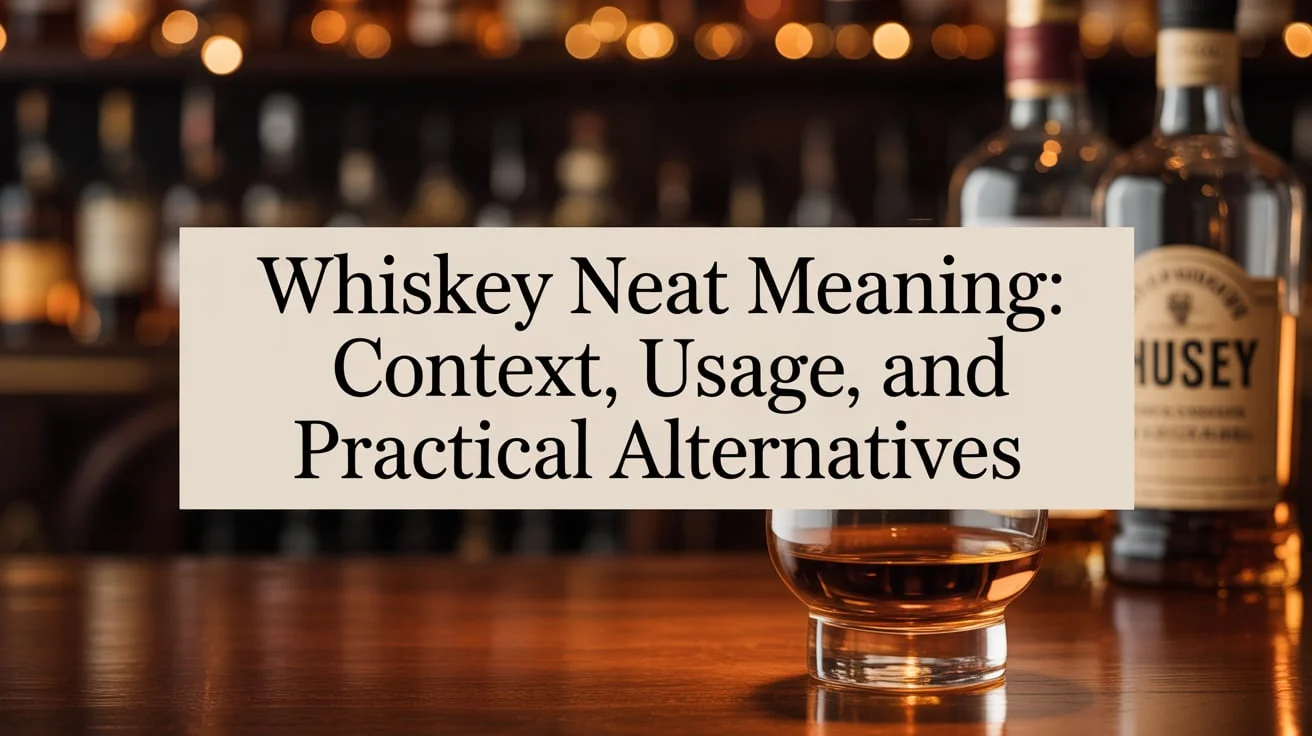
Ordering a drink sounds simple. Yet one small phrase can change your whole glass. “Whiskey neat” tells a bartender you want pure whiskey with nothing added. No ice. No water. Nothing but spirit and glass. Understanding that phrase helps you pick the right drink, enjoy the flavors, and avoid awkward mix-ups when you’re at a bar or tasting room.
This guide explains the whiskey neat meaning, tracks its history, clears up common confusions, and shows when a neat pour fits best. You’ll find tasting tips, etiquette, alternatives, and real-world examples. Read this and you’ll order confidently next time.
What “Whiskey Neat” Means
Whiskey neat means a single pour of whiskey served at room temperature in an appropriate glass with no mixers, no ice, no garnishes. The spirit is presented pure so you can evaluate aroma, palate, and finish without interference.
Key elements of the whiskey neat meaning:
- No ice or water — nothing dilutes the spirit.
- Room temperature — typically between 60°F and 72°F (15°C–22°C) depending on the room.
- Single pour — standard pour in the U.S. is 1.5 ounces (44 mL) unless otherwise requested.
- Clean glass — often a Glencairn, tulip, or lowball tumbler.
Whiskey Neat vs. Straight vs. On the Rocks
People use terms loosely. Here’s a quick clarification to avoid confusion.
| Term | What it means | Common note |
| Neat | Whiskey served by itself at room temp | No ice or water |
| Straight | Legal/label term for age-stated whiskey in US | Often used interchangeably with neat |
| On the Rocks | Whiskey poured over ice | Causes dilution and chill |
Straight can mean something specific legally in the U.S. It often refers to whiskey aged for a certain time and bottled without blending. But bartenders and customers use straight and neat interchangeably in casual settings. When in doubt say “neat” if you want just the spirit.
Origins and History of “Neat”
The word neat originally meant “clean” or “unmixed.” In drink service the term evolved during the 19th and early 20th centuries. Bartending manuals from the late 1800s used neat to indicate spirits served without additional elements.
A few historical touchpoints:
- 1800s: Bars began standardizing service; neat distinguished a pure spirit from short drinks.
- Early 1900s: With cocktails rising, neat reinforced the idea of an undiluted pour.
- Post-Prohibition: Whiskey culture in America revived; neat became a marker of connoisseurship.
Regional differences persist. In some places straight still gets used instead of neat; in others bartenders will ask “neat or straight?” to clarify.
Common Misunderstandings and Ordering Mistakes
New drinkers often mix up terms. Here are typical slip-ups and how to avoid them.
- “Can I get it neat with ice?” — That’s contradictory. If you want ice ask for “on the rocks.”
- “Straight bourbon neat” — Redundant but OK. It means straight bourbon served neat.
- “Add a splash of water then call it neat” — Not neat. If you add water call it “with a splash of water” or “with a dash of water.”
Bartenders appreciate clarity. A short sentence like “Bourbon, neat, 1.5 ounces” removes ambiguity.
Whiskey Neat in Modern Context
Over the last decade whiskey culture exploded. Craft distilleries, tasting bars, and whiskey clubs pushed people to value flavor nuance. That renaissance made neat more popular among beginners and aficionados alike.
Why neat matters now:
- Flavor clarity — No dilution means you smell and taste the spirit naturally.
- Education — Tasting neat helps you learn a whiskey’s true profile.
- Respect for craft — Distillers design whiskey to taste a certain way. Neat respects that intent.
When to Order Whiskey Neat
Order whiskey neat when you want to:
- Savor a spirit with a clear aroma and full mouthfeel.
- Taste differences between barrel char, mashbill, or cask finish.
- Experience a high-proof whiskey where dilution might mask layers.
Order something else when you want a lighter, cooler, or more casual experience.
How to Enjoy Whiskey Neat: Practical Tips
A neat pour rewards attention. Use these simple habits to get more from your glass.
Glassware matters. Use a Glencairn or tulip glass when you want to nose aromatics. The narrower rim concentrates scent. Use a lowball tumbler when you prefer a relaxed bar vibe.
Standard pour. Ask if the bar uses a 1.5 ounce pour. Upscale bars sometimes pour 2 ounces, and tasting flights often use smaller measures.
Swirl gently. A small swirl releases aromatic compounds. Don’t overdo it or you’ll volatize the delicate top notes.
Nose before sipping. Place the glass an inch from your nose and inhale gently. Take two or three breaths to find different layers.
Sip and rest. Take a small sip and let it coat your tongue. Pause between sips to notice evolving flavors.
Add drops of water if needed. A 1–3 drop approach can open up higher proof whiskies. Try using a straw or water dropper.
Temperature matters. Avoid cold rooms; extremely low temperatures numb your palate and hide subtleties.
Sensory Guide: What to Expect When You Drink Whiskey Neat
Whiskey reveals itself more clearly neat. Here’s how to parse the main sensory elements.
Appearance. Color tells a story about cask type and age. Deeper amber often indicates longer cask time or sherry/pacific cask finish.
Nose. Common nosing terms: vanilla, caramel, oak, fruit, spice, peat, smoke, leather, chocolate. High-proof spirits tend to offer bold, intense aromas.
Palate. Taste elements break into sweetness, spice, bitterness, and body. Sweet notes come from residual sugars and cask influence. Spices come from rye, barrel char, or peat.
Finish. Length and character of the aftertaste matter. A long finish lingers with evolving flavors. Neat service highlights finish more than diluted pours do.
Alternatives to Whiskey Neat and When to Choose Them
Knowing alternatives lets you pick the right style for the moment. Below is a table showing options and when to choose each.
| Style | Description | Best for |
| Neat | Plain whiskey at room temp | Tasting and savoring |
| On the Rocks | Whiskey over ice | Casual drinking and cooling the drink |
| With Water | A few drops or a splash added | High-proof whiskies, softening flavor |
| With a Twist | Citrus peel added for aroma | Lightening heavy flavor profiles |
| Cocktail | Whiskey mixed with other ingredients | Social settings and flavor balance |
| Tasting Flight | Several small neat pours in one sitting | Exploring different expressions |
When to Pick Each Style
- Choose neat if you want full flavor and a whiskey-first experience.
- Choose on the rocks for a chilly, mellow drink that opens gradually.
- Choose with water if alcohol burn masks aromatics or if whiskey is very high proof.
- Choose a cocktail when you want complexity or lower ABV.
How a Little Water Changes Whiskey: A Mini Case Study
Setup
Two whiskies were tasted neat then with a splash of water.
- Maker’s Mark Bourbon — 45% ABV (90 proof). Rich caramel, vanilla, oak.
- Glenfiddich 12 Single Malt — 40% ABV (80 proof). Pear, malt, subtle oak.
Method
- Pour 1.5 oz neat in Glencairn glass.
- Nose and sip twice.
- Add 1 drop of room-temperature water.
- Re-nose and re-sip.
Results
Maker’s Mark neat delivered a bold vanilla and caramel profile with a warm alcohol presence. One drop of water softened the ethanol burn and opened a cinnamon and toasted oak layer.
Glenfiddich 12 neat showed gentle pear and malt with a shorter finish. A drop of water brightened the pear note and extended the finish slightly.
Takeaway
A small amount of water can reveal hidden notes, especially in higher-proof bottles. Start with one drop and increase gradually.
Read More: MBN Meaning in Text 2026: The Complete Guide to Using MBN Correctly
Glassware and Pour Sizes: Facts You Should Know
- Standard US pour: 1.5 ounces (44 mL). Many bars use this as a default single.
- Tasting pour: 0.5–1.0 ounce (15–30 mL). Used in flights.
- High-end bars: Some pour 2.0 ounces for premium bottles. Always ask if you want a specific serving.
- Best glasses for neat whiskey:
- Glencairn glass — concentrates aromatics for nosing.
- Tulip glass — similar to Glencairn for scent capture.
- Lowball tumbler — casual, comfortable, and traditional.
- Copita — used in professional tastings for delicate nosing.
How to Order Whiskey Neat Politely and Clearly
Saying it right avoids confusion and shows good manners. Keep it short and specific.
Good examples:
- “Bourbon, neat, 1.5 ounces please.”
- “Scotch neat, please. Glencairn glass if you have one.”
- “Rye neat, small pour” if you want less.
Avoid ambiguous phrases like “neat with a splash.” If you want water say “neat with a splash of water.” If you prefer ice say “on the rocks.”
Bartender tips:
- Ask the bartender if you’re unsure about house pour sizes.
- If you’re tasting a new bottle ask for a smaller pour.
- Say thanks and offer a tip when service was helpful.
Pairing Food with Whiskey Neat
Food can accentuate whiskey flavor. Pairing neat whiskey is about balancing flavors rather than matching them.
Good pairings:
- Bourbon neat: Pair with smoked barbecue, dark chocolate, or sharp cheddar.
- Single malt Scotch neat: Pair with smoked salmon, blue cheese, or roasted nuts.
- Rye neat: Pair with spicy BBQ, pickled vegetables, or smoked meats.
- Irish whiskey neat: Pair with lighter fare like apple tarts, baked ham, or mild cheeses.
Small palate cleansers like water and plain crackers help reset between tastes when doing flights.
Real-World Examples: How Bars Serve Neat Whiskey
Case studies from bar service show real practice.
Neighborhood bar: Often pours 1.5 oz in a lowball tumbler by default. Neat requests often get served in whatever glass is available.
Specialty whiskey bar: Usually pours 1.5–2 oz in Glencairn or tulip glass. Staff often ask if you want a splash of water for higher proof bottles.
High-volume cocktail bar: More likely to serve neat in tumblers and to standardize pour sizes to manage inventory.
The takeaway: service varies. If a particular presentation matters say so when ordering.
Frequently Asked Questions About Whiskey Neat
What does whiskey neat mean exactly?
Whiskey neat means a single pour of whiskey served at room temperature without ice water or garnish.
Is neat the same as straight?
Sometimes people use them interchangeably. Legally straight can carry specific age or production requirements in the U.S. For ordering stick with neat if you mean no additions.
How much is a standard neat pour?
A standard U.S. pour is 1.5 ounces (44 mL). Tasting pours are smaller.
Can I add water and still call it neat?
No. If you add water say “with a splash of water” or “with a few drops.”
What glass is best for neat whiskey?
A Glencairn or tulip glass helps capture aroma. A lowball tumbler works well for casual service.
Why do bartenders sometimes refuse to serve whiskey neat?
Bartenders rarely refuse neat pours. They might decline if you request unsafe practices or ask for an illegal or unlicensed bottle.
Myths and Facts About Whiskey Neat
Myth: Neat whiskey always tastes too strong.
Fact: Properly produced whiskey balances alcohol and flavor. If it tastes harsh try a smaller pour or a few drops of water.
Myth: Only connoisseurs drink whiskey neat.
Fact: People of all levels enjoy whiskey neat. It’s a straightforward way to taste the spirit.
Myth: Ice is always a better choice for beginners.
Fact: Ice cools and dilutes but also masks subtle flavors. Beginners benefit from small neat tastings to understand flavor before adding ice.
Recommended First Bottles to Try Neat
If you want to explore neat whiskey, start with approachable bottles known for balance and flavor.
- Bourbon: Maker’s Mark — 45% ABV. Smooth, vanilla-forward.
- Bourbon: Buffalo Trace — 45% ABV. Rich with caramel and oak.
- Rye: Bulleit Rye — 45% ABV. Spicy and bold.
- Scotch (single malt): Glenfiddich 12 — 40% ABV. Light fruity malt.
- Irish Whiskey: Jameson — 40% ABV. Smooth, approachable.
These bottles offer good value and consistent profiles that work well neat.

Sophia adds humor and confidence to Captioniy.com. Her witty Instagram captions and bold quotes help readers make their posts stand out.